
Periodic Table of Sinister Emojis
Free Download
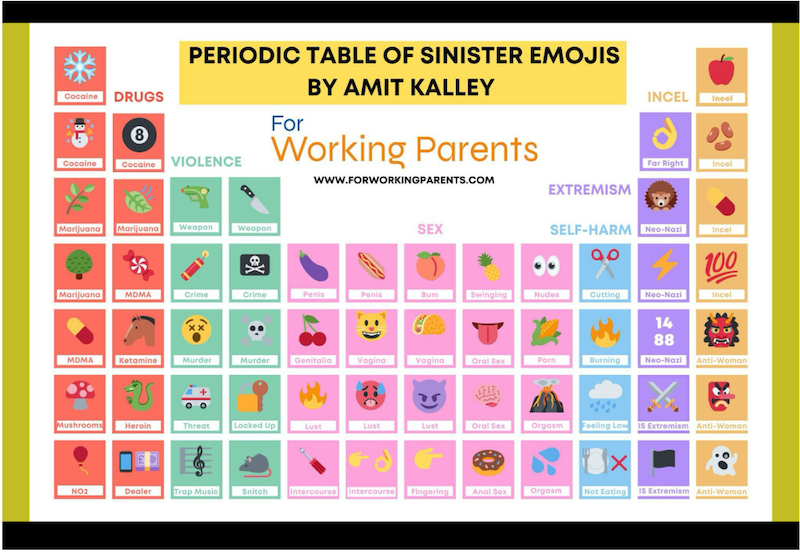
Curious what your teen is texting? Get our handout that shows the “codes” that teens may be texting and what they mean.
Why emoji “codes” are worth understanding
Emojis are a second language for teenagers, and like any language it drifts. A symbol that means one thing to you can carry a very different meaning in a group chat — sometimes about drugs, sex, self-harm or exclusion, and sometimes about nothing at all.
The goal here isn’t to turn you into a code-breaker or to hand you a reason to search your kid’s phone. It’s to remove the blank spot, so that if something does look off, you can ask about it from a place of knowing rather than panic.
How to use this without blowing up trust
- Lead with curiosity, not accusation. “What does this one mean? I’ve seen it a few times” gets further than “I know what this means.”
- Remember that context decides meaning. The same emoji can be a joke between friends one week and something heavier the next.
- Treat it as an opening, not a verdict. One symbol is a conversation starter, not evidence.
- Keep the door open. Teens tell the parent who reacts calmly. That’s the whole strategy.
Our free handout lays out the symbols parents most often ask about and what they can mean, so you’re not guessing.
Sign up below to join our Love Isn’t Enough newsletter and get instant access to the download:
Common questions from parents
What are “sinister” emojis?
It’s shorthand for everyday emojis that carry a second meaning in teen messaging — often referring to drugs, sexual content, self-harm or social exclusion. Most have an ordinary meaning too, which is exactly why they’re easy to miss.
Should I be reading my teen’s messages?
That’s a family decision and it depends on your child’s age, history and your agreements with them. What matters more than surveillance is whether your teen believes they can bring you something difficult without the roof coming off.
My teen used one of these. What now?
Ask before you conclude. Tell them what you saw, say you want to understand rather than punish, and listen to the whole answer. If what you learn worries you, that’s the moment to involve a counselor or your pediatrician.
© 2025 Love Isn't Enough | About Joree | About John | Connect | Terms of Use & Privacy Policy