
3 Scientifically Proven Paths To Happiness, Or Finding a Psychologically Rich Life In Portugal
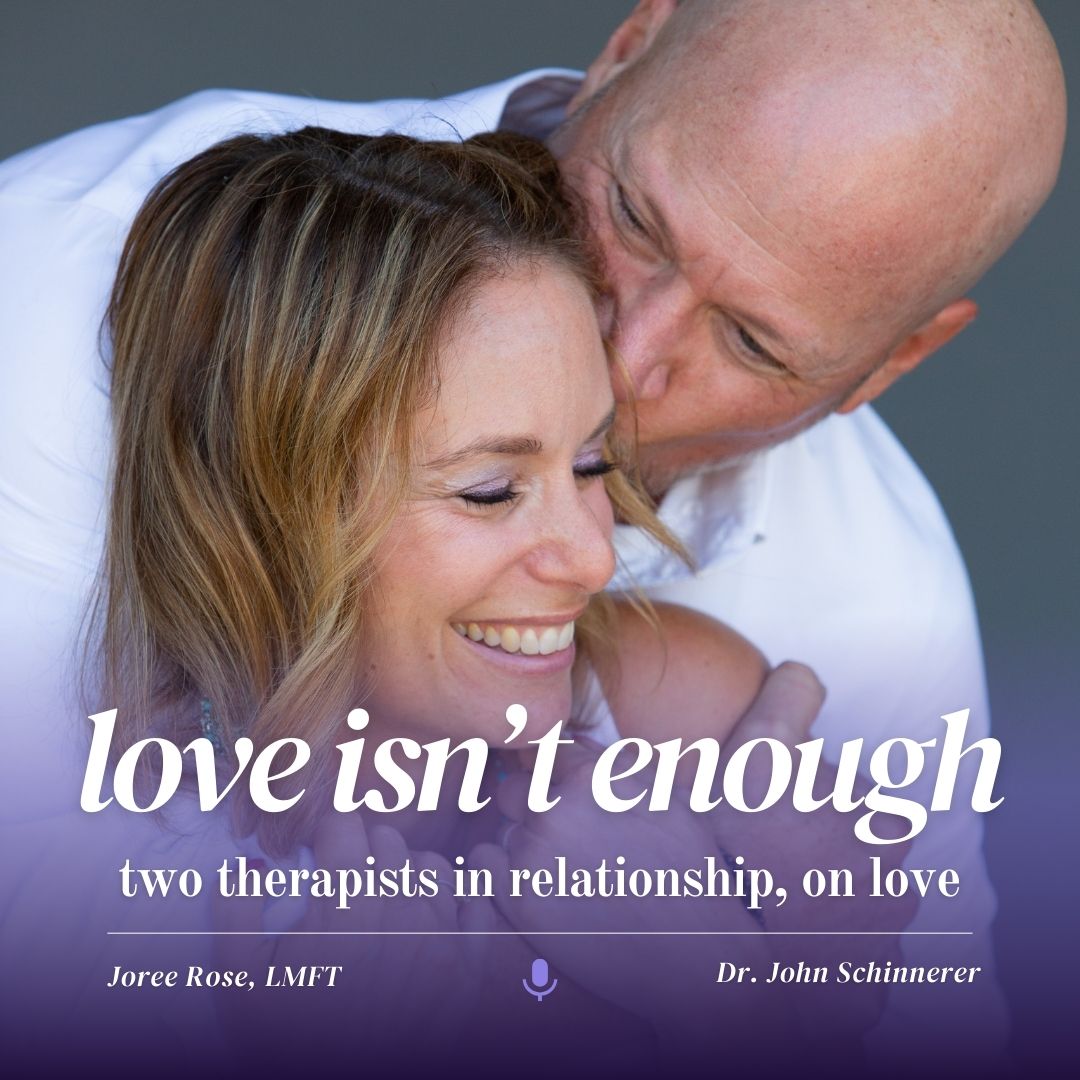
In this intimate, story-driven episode, Joree Rose, LFMT and Dr. John Schinnerer explore three complementary paths to a good life:
1) pleasure (hedonic happiness),
2) purpose (meaning), and the newly discovered third path:
3) psychological richness.
Drawing on positive psychology research from Dr. Shigehiro Oishi’s new book, “Life in Three Dimensions,” they unpack how novelty, challenge, and perspective shifts can transform not only your mood, but your worldview. You’ll hear the mindset shifts behind their next big leap – relocating to Portugal – and how they moved from what was “pushing” them (escaping comfort and routine) to what was “pulling” them (following intuitive breadcrumbs, synchronicity, and community). They explore further what it means to be stuck on the hedonic treadmill, and how gratitude and savoring can interrupt it; why meaning without balance can narrow your life; and simple ways to diversify your daily experiences so you’re changed by the way you choose to live. This episode blends candid storytelling including wrong turns, roundabouts, and serendipity, science-backed tools in areas of mindfulness, values, strengths, and relationship wisdom. If you’ve been craving more aliveness, adventure, and connection in your life, consider this your invitation to design a psychologically rich one.
What You’ll Learn in This Episode: Three Proven Paths to Happiness
-
The 3 paths to a “good life” from positive psychology—and why focusing on only one can backfire:
-
Happiness/pleasure (hedonism)
- Meaning/purpose (eudaimonia)
-
The psychologically rich life (novelty, variety, challenge, perspective shifts)
-
-
What the “hedonic treadmill” is (why new stuff, new experiences, even new love fades fast) and how it can leave you stuck chasing the next hit.
-
How to extend positive emotions on purpose using gratitude and savoring—so joy lasts longer than 3 seconds and doesn’t get bulldozed by your brain’s negativity bias.
-
Why mindfulness is basically a happiness cheat code, including:
-
slowing down to actually notice what’s good
-
practicing “beginner’s mind” so life doesn’t turn into background noise
-
allowing emotions to arise without judging or panicking about them
-
-
How to spot “foreboding joy” (that sneaky “this is too good… what’s about to go wrong?” feeling) and how to redirect your attention before you ruin your own good moment.
-
A simple self-check for contentment: asking, “Are my basic needs met right now?”—and using that answer to anchor yourself back into the present.
-
How to build meaning and purpose through:
-
clarifying your core values
-
identifying your strengths (VIA strengths test + noticing what people consistently compliment you on)
-
aligning your work and relationships with what matters most
-
-
The hidden downside of a purpose-driven life: how “meaning” can become too narrow, leading to work obsession and neglected relationships—and why balance matters.
-
What a psychologically rich life actually looks like (spoiler: it’s not always comfortable), and why challenge, travel, surprises, and “plot twists” can create deep fulfillment—even when they’re stressful.
-
How to create psychological richness without moving to another country, including:
-
getting out of routine
-
collecting “perspective-shifting” experiences
-
connecting with strangers and building story-worthy moments
-
-
A powerful reframe on obstacles: why the thing blocking you may be the exact thing you’re meant to grow through—and how that mindset can change your entire life trajectory.
Connect with Joree & Dr. John and Love Isn’t Enough:
• Website: www.loveisntenough.net
• Instagram: @loveisntenough33
• Subscribe to their podcast: Love Isn’t Enough
• Join our relationship Master Class series: https://loveisntenough.net/masterclass/
Connect with Joree Rose:
• Website: www.joreerose.com
• Instagram: @joreerose
• Subscribe to her podcast: Journey Forward with Joree Rose
• Join the Podcast Membership: https://joreerose.com/journeyforwardpodcast/
Connect with Dr. John Schinnerer:
• Websites: www.GuideToSelf.com | www.TheEvolvedCaveman.com
• Instagram: @theevolvedcaveman
• Subscribe to his podcast: The Evolved Caveman
If this conversation resonated, here are a few ways to go deeper:
• Subscribe to the Love Isn’t Enough podcast
• Leave a review—Scroll down and click Write A Review. It helps more couples find this work
• Join our Monthly Relationship Masterclass on building an emotionally safe and thriving ‘ship
• Work with us directly in couples counseling or coaching. Email (below) to inquire about availability
About Your Hosts:
Dr. John Schinnerer is an executive coach out of U.C. Berkeley specializing in emotional intelligence, anger, the evolution of men, and relational health. He has worked with men and couples for over 30 years. He was an expert advisor on the academy award-winning movie, Inside Out. His online anger management class has taught over 25,000 people how to reduce their anger for a happier, calmer life.
Joree Rose, LMFT is a marriage and family therapist focused on emotional safety, attachment, and healing relationship wounds. she has focused on guiding women to greater life satisfaction and purpose and has written several books.
Full Transcript Here:
Three Proven Paths to Happiness with Dr. John Schinnerer and Joree Rose, LMFT – Transcript
Joree Rose, LMFT: Hello and welcome back to the Love Isn’t Enough Podcast. I am here with my soon-to-be husband.
Dr. John Schinnerer: Three weeks now.
Joree Rose, LMFT: At the time that this is released, it’s going to be more like two weeks.
Dr. John Schinnerer: Wow.
Joree Rose, LMFT: We’ve only been dating together for 10 years, so 10 years and overnight is what it feels like for us getting married. I am Joree Rose.
Joree Rose, LMFT: I’m a licensed marriage and family therapist.
Dr. John Schinnerer: And I’m Dr. John Schinnerer. I am not a licensed marriage and family therapist.
Joree Rose, LMFT: I’m always fascinated with where he is going to take his introduction today?
Dr. John Schinnerer: I didn’t even know that was coming.
Joree Rose, LMFT: What’s coming next? You just keep me on my toes, which is why life with you was so fun. Which actually leads into what we’re talking about today. We’re going to do a bit of storytelling, so all you who like to know the. Deeper details of our lives.
Joree Rose, LMFT: We’ll find out some more stuff, but it’s always rooted in some sort of grounding practices, research psychology, because that’s the nerdy couple that we are.
Joree Rose, LMFT: This episode is fundamentally about how to be happy, the ways to a happy life, the paths you can take to get there.
Joree Rose, LMFT: What we’re doing to ensure that we’re living as fully as we can.
Dr. John Schinnerer: Yeah. A while back, I read a book, a fantastic book, in positive psychology, and, lemme just read some of this from my notes because it’s by a positive psychologist, Dr. Shigehiro Oishi , and the book is entitled Life in Three Dimensions.
Dr. John Schinnerer: It aims to answer the question posed by Aristotle 2000 years ago of “What is the good life?” And in positive psychology, for the last 30 years, we knew that there were two paths to the good life. One is hedonism or happiness, which consists of enjoyment, positive emotions, and satisfaction with life. The second path is eudaemonia, or meaning, having purpose, contributing, and feeling that your life is significant.
Dr. John Schinnerer: Oishi argues that each of these has some limitations. The happiness path can lead to complacency. The hedonic treadmill idea that we habituate to new things, good things, and bad things, can lead to routine and regret. I could have done more, meaning can lead to narrowness or self-sacrifice at the cost of one’s own richness of experience.
Dr. John Schinnerer: Oishi came up with a third path. To this question, this to me is the most important question we could answer in our lifetime, and he terms it. The psychologically rich life. The psychologically rich life in its most simple terms is a life filled with variety, novelty, challenge, and perspective shifts, not simply to be happy or be useful.
Dr. John Schinnerer: It’s about allowing yourself to be changed by what you experience. And the key features are diverse, unusual, and interesting experiences that shift your perspective. So it’s not purely about fun or comfort, because sometimes these challenging, hard, and unexpected moments can make the most richness. So it’s a life with twists and turns, detours, and turning points rather than the same routine over and over.
Dr. John Schinnerer: And if you think of some of the greatest minds, lives, and histories. They were psychologically rich lives, I think, of Hemingway or DaVinci or Franklin. They all had really challenging experiences, but at the end of the day, at the end of their lives, they could look back and they had these amazing stories that they’ve lived, experienced, and could share, and so this idea of the psychologically rich life was one of the things that has driven Joree and me to pursue a life elsewhere.
Dr. John Schinnerer: A life in Portugal actually.
Joree Rose, LMFT: So before we jump into that, the first one is, there’s a phrase in that first path of the hedonic treadmill. And I don’t know that many people would actually understand what that means, but it’s actually something we see a lot of people getting stuck on.
Joree Rose, LMFT: So maybe let’s go into that a little bit. Sure. To understand. What is that hedonic treadmill and why might that be a temporary path to happiness but not a lasting path?
Dr. John Schinnerer: The hedonic treadmill is a powerful psychological phenomenon that we humans adapt to, and we adapt to anything good or bad. Now, if we have some bad circumstances in our life, this actually can be protective.
Dr. John Schinnerer: However, if you have good things in your life, it tends to work against us. So for example, let’s pretend I bought a brand-new car, and this new car looks fantastic. I’m so excited about it. Like it gives me a boost in my step when I get out and I step into it and I drive it, and I feel like, all right, I’m a badass.
Dr. John Schinnerer: This feels fantastic. And so it adds to my life satisfaction. It adds to my confidence even. But over time in this timeframe, could be 8, 10, 12 weeks, maybe a few months, I grow habituated, I grow accustomed. I start to take the car for granted. And as soon as I take that new car for granted, it ceases to add anything to my satisfaction with life.
Dr. John Schinnerer: And this happens all the time. It happens in relationships, it happens with purchases of houses, of jewelry, of anything, a new tv This is one of the things that we have to be aware of and I would say challenge if we want to have more positive emotion in our life. And one of the best ways to me to challenge this is one of the things that joy’s an expert in, which is gratitude.
Dr. John Schinnerer: I can practice gratitude for different aspects of the car daily and fight that adaptation fight that. Tendency that my mind has to just take new things for granted and that extends my satisfaction with the car, my appreciation, my pleasure. And so it’s one, it’s a really powerful idea to get ahold of.
Joree Rose, LMFT: So lemme jump in there too. A couple things that make me, that came to my mind as you were talking about that one is the hedonic treadmill. It’s a reminder of kind of the sex, drugs, and rock and roll.
Dr. John Schinnerer: Yes.
Joree Rose, LMFT: Yes. So to think that we can live hard, live fast with these quick boosts of positive emotion experiences, but they don’t last.
Joree Rose, LMFT: And I think that’s what we’re naming is the, they’re quick and through gratitude you could try to harness it. And yet it’s, to me, looking for an external. Thing to give me internal happiness.
Dr. John Schinnerer: Yeah. I’m not opposed to hedonism. I’m not opposed to sex, drugs, and rock and roll. I’m not opposed to positive emotions.
Dr. John Schinnerer: I’m a big positive emotion fan. One is that hedonistic pleasures only last as long as the pleasure lasts, typically. Sex lasts, 30 seconds to three hours. The pleasure’s fantastic during that time, but then there’s a slight afterglow and then the positive emotions fade.
Dr. John Schinnerer: And so one of the things that’s interesting to me is being aware of that phenomenon. And then I think one of the paths to happiness that I’ve worked on, that I’ve spoken to men about for 30 plus years is to be aware of positive emotions. Be aware of the opportunity to feel positive emotions around you throughout the day.
Dr. John Schinnerer: And I really think because of the way we men are socialized in the man box, most of us have no idea when a positive emotion even smacks us upside the head. It just goes right over our head and we miss it and we miss that opportunity for momentary pleasure, happiness, satisfaction. And so I’m always urging my male clients to spot or think about where can I spot these positive emotions?
Dr. John Schinnerer: For instance, just going outside and looking at nature invokes awe. And training yourself to focus on the trees and the sky and the grass and a creek, or the ocean is one way to do that. But the other thing about positive emotions is that they’re fleeting, they’re fragile, and they’re quiet.
Dr. John Schinnerer: They whisper to us. And so they’re not like the negative, uncomfortable emotions which yell at you a lot of times. Like you know damn well when you’re angry. After a while when you’re depressed, you know when you’re fearful, anxious, panicking. But you have to tune in to positive emotions.
Dr. John Schinnerer: And one of the things you want to learn how to do is savor them. In other words, stretch them out over time. Be with them. Don’t overthink them, but just be with them and see if you can stretch them from one to three seconds to 10 seconds, 30 seconds, and so on.
Joree Rose, LMFT: So the other thing that makes me think about is this is a fundamental mindfulness practice.
Joree Rose, LMFT: Absolutely.
Joree Rose, LMFT: This is really the root of where mindfulness came from was the Buddha wanting to understand, how can I be happy because he was raised in a palatial kingdom and had all of the earthly pleasures. Around him of a palace and all the things and servants, but wasn’t happy.
Dr. John Schinnerer: Yeah.
Dr. John Schinnerer: It’s interesting. It brings up a memory of mine. Like I was talking to Jo Joseph Peri, who’s a Stanford neuroscientist, and I have a lot of respect for him. He was doing a study on depression and doing brain scans and he found that there was this imbalance in people that were depressed in terms of the intensity of negative emotions that they feel, and the almost lack of intensity of positive emotions or lack of presence of positive emotions.
Dr. John Schinnerer: And I said, yeah, to me, working with clients, that makes a lot of sense because depression to me is not just about being depressed more, being more impatient, more irritable, easier to get triggered. It’s largely about the inability to tap into positive emotions. And that’s tragic to me.
Joree Rose, LMFT: Yeah. So going back to those fundamentals of mindfulness, that path to happiness to me, requires slowing down, being in the present moment, like the car, being able to not just practice gratitude, but to savor it, to look at things with awe as if with a beginner’s mind, as if for the first time, because what happens with that habituation?
Joree Rose, LMFT: Our neural pathways are so fixed, we don’t even see it anymore. We just completely skip over it in our own awareness, let alone our ability to take in the positive emotion we’re feeling from it and the practices of some of those fundamental mindfulness beliefs and tenets of non-attachment and being in the present moment and when we can do that.
Joree Rose, LMFT: We are so much more able to take in.
Dr. John Schinnerer: The other aspect of mindfulness that comes in here is to allow whatever’s arising to arise without judgment. Because acceptance, a lot of times, I think what happens is that idea of foreboding joy, right? We get this glimpse of happiness, something good happens in our lives, and we’re like, Ooh, this feels really nice.
Dr. John Schinnerer: And they’re like, oh shit. When’s the other shoe gonna drop? What’s gonna happen next? Something bad’s gonna happen, and then it’s gone.
Joree Rose, LMFT: I used to even get that when you moved in and we’d spend the weekend together, and I’d get like that Sunday scaries when you’d have to go back home and I. I had such a beautiful weekend, and then it came to an end, and then all those products of emotions slipped away as I went into that foreboding joy. I’m much better. I’m much better since you moved in.
Joree Rose, LMFT: So there you go.
Joree Rose, LMFT: But no, it’s not just from you. I. I think it’s an awareness of where my mind’s attention is resting and pulling it back into what thoughts are serving me, what are the thoughts to focus on that make me feel better?
Joree Rose, LMFT: Because thoughts are thoughts, our mind’s gonna keep producing them with greater awareness and skill of practice. We can recognize which are the ones that are bringing us down a rabbit hole that is not serving us and bringing it back.
Dr. John Schinnerer: Yeah. I think you bring up a really good point that it’s a matter of what we train our minds to focus on.
Dr. John Schinnerer: I was talking with a young client about this yesterday, where. We are complex, we’re contradictory, we’re paradoxical, we’re walking contradictions. And we have the ability to simultaneously experience multiple emotions, which means that at the same time, you might feel contentment, peace, relaxation, anger, some sadness, some anxiety, and it’s a matter of what do you focus on.
Dr. John Schinnerer: And one of the things I was sharing with him is look, ask yourself the question. Are all my basic needs met right now in this moment? And most of the time, the answer to that question is yes. I’ve got a roof, I’ve got clothes, I’ve got a bathroom, I’ve got water. I’ve got food if I’m hungry, and okay.
Dr. John Schinnerer: Yeah. So most of my basic needs are met. If the answer to that is yes, you are feeling contented. Which is like a mild happiness to me, at a minimum. You’re content. Now, you might be feeling a lot of other things as well, but the question is, what are you focusing on?
Joree Rose, LMFT: And I think contentment, we’ve talked about this before, is a real underweight, underrated emotion. And an underrated goal for people to feel, because to me, contentment is no longer striving, which is again, another tenet of mindfulness practice is to not strive and to be where you are and appreciate where you’re at.
Joree Rose, LMFT: So the path to happiness. Sex, drugs, rock and roll. Heat isn’t all good. Nothing wrong with it, but we still want to be able to harness it out because some of those can be fleeting.
Joree Rose, LMFT: The second path you mentioned earlier is meaning and purpose.
Joree Rose, LMFT: Yes.
Joree Rose, LMFT: And this is something we live with daily because we are constantly looking at opportunities to fulfill our meaning and our purpose.
Joree Rose, LMFT: And for us, that’s a variety of things. Learning, growing, doing the work that we do, doing this podcast, doing our work together. Deep diving into our relationship, talking through things, how we serve our clients, how we show up as parents to our daughters, like our list goes on. But one of the things that I have found to be helpful in helping clients identify greater meaning and purpose is looking at their core values.
Joree Rose, LMFT: That’s a great underlying path. The values are going to be what drives our behavior, makes our decisions a little bit more clearer. And so what would you recommend for people who really want to find deeper meaning and purpose in their lives? Values is the practice that I often go to first.
Joree Rose, LMFT: What would you recommend if someone is. Wanting to find that and not sure where to start?
Dr. John Schinnerer: Exercise is a good way to dip your toe in. I think the other way to go is to take the strengths test on, what is it? Authentic Happiness.org. The VIA strengths test.
Dr. John Schinnerer: You can get what your strengths are and then you can begin to start looking for a job or work that matches your strengths most closely. The other way is to look at what are some compliments you’ve gotten in the past from other people about what you do well or where you light up or what you’re passionate about.
Dr. John Schinnerer: Those are good kinds of ways to look under the rocks here. And the other thing I wanted to say about meaning is, I look back at really painful, difficult moments in my life, like when I was separated and getting divorced and I just, my personal life was brutal.
Dr. John Schinnerer: It was just rough. And I could go to work and find meaning in helping clients, serving clients, and that buoyed me throughout a really difficult time in my life. Yeah. And I think that’s the beauty of meaning. Meaning.
Joree Rose, LMFT: Yeah.
Dr. John Schinnerer: Now, the downside of meaning is that I also have clients that find their work incredibly meaningful.
Dr. John Schinnerer: The work that some of them are doing is working on biotech or in some tech that holds the promise of furthering humankind, of bettering our lives, of solving some great disease. This is the narrowness that means that you have to be careful of, that you can get so over-focused with it that you can exclude other things in your life that are incredibly important relationships.
Dr. John Schinnerer: It hurts and damages the people that you care about the most. And so I think it’s always interesting to me because a lot of these areas and personality traits that we talk about, I think of them on a spectrum. Yeah. And a lot of times you don’t want to be at a one or a 10.
Dr. John Schinnerer: No. You want to be somewhere in the middle. As it subtly said, it’s moderation.
Joree Rose, LMFT: It’s balance. And that brings up a really good point. If you’re doing great work out in the world and your relationships are being compromised as a result. It’s an interesting question of how much weight do we put on the work that provides, meaning if we’re not equally, or at least somewhat sharing the attention with the relationships, because we also know volunteer work giving back.
Joree Rose, LMFT: Community raising kids, which is also an interesting thing that we’ve talked about before, that the. Life satisfaction goes down. Yes. During raising kids, even though it’s one of the most meaningful times of our life. And so I think that’s another great reminder. You can have great meaning and it still be really hard.
Dr. John Schinnerer: Interesting, just as you said that, sorry for interrupting. I had the thought that raising kids could actually fulfill two of those paths that we just discussed. It’s not going to increase your positive emotions necessarily a lot.
Dr. John Schinnerer: It’s not. Me, I think that’s true. I can, especially in the early years, but then when they get to be teenagers and then there are less positive emotions.
Joree Rose, LMFT: I’m one of those outliers. I loved the baby stage. Yeah. And I had really easy teenagers, so I actually had a lot of positive emotions. Let’s just put it out there that some people can get it.
Joree Rose, LMFT: Sure. Fair enough. Through all the whole thing.
Dr. John Schinnerer: I still
Joree Rose, LMFT: had hard moments. My thought
Dr. John Schinnerer: I think it’s definitely meaningful. It’s one of the most meaningful things you can do to have kids raise kids. And then it also fulfills that psychologically rich life that you’ve got novelty, you’ve got variety, you’ve got challenge, you’ve got good stories, and it necessarily changes your perspective on the world without a doubt.
Joree Rose, LMFT: And one of the best parts is you’re seeing the world through their eyes. Yeah. So it’s a perspective, a constant reminder of beginner’s mind. So jumping into the third one, which is really what we’re excited about and what I really wanted to delve into today is this third path.
Joree Rose, LMFT: ’cause as you said, you and I together, both individually and I think as a couple, we’ve really fulfilled those first two quite often. We seek out those opportunities. We look for the purpose and the meaning. We harness, we have the gratitude, we. Don’t just focus on the hedonism for the sake of hedonism. So I feel really confident in what we’ve done to create a happy life together, but this psychologically rich one that helps to change your perspective on how you see the world.
Joree Rose, LMFT: We’re taking a pretty deep dive and a big jump into creating that opportunity, which is we are looking to move to Portugal. And this has been something we’ve been thinking about, I don’t know, six, seven years now.
Joree Rose, LMFT: So actually before COVID, we had this thought of, wouldn’t it be amazing if we could go have the experience of living abroad?
Joree Rose, LMFT: Year, a couple of years have an adventure. And at the time we both had offices and thought that’s gonna be a hard sell,
Dr. John Schinnerer: and the kids were younger.
Joree Rose, LMFT: We weren’t gonna do it at that time. But it was more about, in my mind, at that time, we had offices. It was gonna be a really hard sell to convince our clients who came to our office each week to all of a sudden go virtual.
Joree Rose, LMFT: Thank you to COVID. It trained our clients to be virtual and opened up that possibility in a much more realistic way. So then the question was, where would we go? And of course, the timing would always be when our kids were old enough out of the house, when they were able to be more adjusted on their own.
Joree Rose, LMFT: Where would we go? What would that look like?
Joree Rose, LMFT: So we’ve been exploring this thought and have narrowed it down.
Dr. John Schinnerer: Yeah. So we went recently on an eight-day madcap journey through 16 cities in Portugal. Jo kindly drove because my eyes are still playing catch-up. It was fascinating because the experience was, let’s go to different cities in Portugal and see where we feel.
Dr. John Schinnerer: Is a match for us or what city has a poll? Us?
Joree Rose, LMFT: Can I back up there one second? Yeah.
Joree Rose, LMFT: When we were looking at this Portugal, before we go into the cities, because I want to delve into that part, but why Portugal? And we had a lot of reasons for what ended up with Portugal. Partly location in Europe, it’s like the California of Europe.
Joree Rose, LMFT: Climate, climate-wise, we wanted to be near the ocean. It had a lot of opportunities for. Different variety of topography like we have in California wine country and the ocean. And we want to be near water, but not only that, a very high quality of life, a low cost of living, and one of the easier countries to get a visa in.
Joree Rose, LMFT: And so we’ve been researching this for quite some years, and when we decided to book this trip, we didn’t have much time. When we were also doing this research, I reached out to a friend of mine who has moved her family abroad and asked for any advice that she could give us on the experience of becoming an expat.
Joree Rose, LMFT: And she had us consider some really important questions of what is pushing you versus what is pulling you. That really gave us a moment to pause. And I think in the beginning there were things that we felt pushed that we were wanting to go into a new country, but then we had this realization of we felt this pull and we weren’t really sure what that was.
Joree Rose, LMFT: And it was like following breadcrumbs in my mind of I feel this internal pull towards something that I’m not sure what or why, but I trust my intuition enough. To believe it and to follow it.
Joree Rose, LMFT: So going back to then what you were saying as we did this MAD journey, which. Was fraught with emotion, especially for me.
Joree Rose, LMFT: I think I had a little bit more emotion around the process of the journey, maybe because partly I was doing all the driving and it was a little bit more stressful. ‘Cause driving in Portugal is not an easy feat.
Dr. John Schinnerer: It was crazy at times.
Joree Rose, LMFT: It was wild.
Joree Rose, LMFT: There were times where…
Joree Rose, LMFT: Our GPS took us down streets that I think were just meant to be walking and shopping paths in the middle of, I think golf cart paths at one point. The first one I was referring to was in the middle of logos where I turned down a street that was lined with restaurants and pedestrians and shops.
Joree Rose, LMFT: No other car is going down the middle of this road except for me. And twice on that little expedition, two old Portuguese men, because I was going like two miles an hour ’cause I didn’t wanna hit anybody. There was literally a guy whose elbow I could have reached out and tapped.
Joree Rose, LMFT: Sitting at a table as I drove past.
Joree Rose, LMFT: But these two little Portuguese men just lowered their eyes and shook their head with some shame and pointed me the other way and I didn’t know how to get out of there. We were trying to find our hotel and we ended up on a golf cart path in the middle of a resort property, nowhere near where cars were supposed to be.
Dr. John Schinnerer: We were so embarrassed.
Joree Rose, LMFT: Note to self, don’t trust that Apple Maps in other countries.
Dr. John Schinnerer: In Europe,
Joree Rose, LMFT: we learned that after the fact.
Dr. John Schinnerer: We learned that the hard way.
Joree Rose, LMFT: But some of the other emotions of. We narrowed down Portugal for so many logical reasons that when I got there I felt this, oh shit, what if we don’t find what we’re looking for here?
Joree Rose, LMFT: And then what it was, I was overattached to the idea of Portugal for so long without having been there enough to explore and get a felt sense. Is this the right place for us? So we were very organized. Had an entire outline, eight nights, eight different hotels each day between two and four cities where sometimes we literally drove into a city, got to the middle of the town, looked at each other and said, Nope.
Joree Rose, LMFT: And we left.
Dr. John Schinnerer: No.
Joree Rose, LMFT: And so those first couple of days I felt that pressure. And did you feel that as much?
Dr. John Schinnerer: No, I think I was. Confident that some of the cities I thought were better matches for us were coming on the back half of the trip. Yeah. I was disappointed in Cobra.
Dr. John Schinnerer: ’cause Cobra has one of the oldest universities in the world. There’s a river running through town, and I was like, “ Ooh, this has some really good possibilities in my mind.” Like, we could potentially teach at the university. There were some possibilities there.
Joree Rose, LMFT: Don’t speak Portuguese, though, so that’s a problem.
Joree Rose, LMFT: That’s true.
Dr. John Schinnerer: That’s a problem. We could teach in English anyway. The city itself felt old and old. I don’t want to say dirty, but not quaint.
Joree Rose, LMFT: The parts we were in.
Dr. John Schinnerer: Yeah.
Joree Rose, LMFT: Yeah. It wasn’t what we were looking for.
Joree Rose, LMFT: So we ended up in a town called Ponta Lima. Which is in northern Portugal, about 45 minutes north of Porto.
Dr. John Schinnerer: It’s 20 minutes from the Spanish border.
Joree Rose, LMFT: And we were actually introduced to some friends who moved there from the US five years ago. So we went up there and stayed overnight.
Dr. John Schinnerer: Out to Larry and Linda.
Joree Rose, LMFT: This was a pretty funny experience too. We were singing at this most amazing bed and breakfast I think I’ve ever been at. That
Joree Rose, LMFT: is incredible.
Joree Rose, LMFT: We’re heading over to Larry and Linda’s for dinner, and we were planning on going to see the town because it was gonna be all lit up on the bridge over the river.
Joree Rose, LMFT: I made a wrong turn on the roundabout and ended up on a toll road that I thought, “Okay, no big deal.”
Joree Rose, LMFT: I’ll just get off the next exit. Yeah, the next exit was 20 kilometers away. It was a long
Joree Rose, LMFT: detour.
Joree Rose, LMFT: And when we texted our friend saying, “Sorry, we’re going to be a little bit late. They’re like, “It’s Portugal, you’re on Portuguese time.”
Dr. John Schinnerer: And Larry was like, “Yep, I’ve done that exact same thing before.”
Joree Rose, LMFT: So it was a great reminder to not take ourselves too seriously to let the path unfold, but the next day, because it was raining that night and. Of course when we were on the detour driving the song “Into the Mystic” was playing, and that was just like, “So apropos, I bet
Joree Rose, LMFT: Morrison,
Joree Rose, LMFT: where we were. ’cause it was foggy and misting and raining and we had no idea what we were driving into.
Joree Rose, LMFT: So I love those felt memories. Marie, like multiple senses. But the next day we went into town and we were like, “Oh. This is like really beautiful.”
Dr. John Schinnerer: Yeah. That was the first felt sense of, “Oh, I could spend some time here, be here. This is gorgeous.”
Joree Rose, LMFT: I felt peaceful. I felt a lot of awe and I felt the community, yeah.
Joree Rose, LMFT: Around us, and we both looked at each other and were like, “Oh.” And all of a sudden, my anxiety, I had felt for the first few days, melted away. “ I can do this.” Now we don’t. I think we want to end up there because it’s a little bit colder and rainier than we would like.
Dr. John Schinnerer: I think it’d be a little slower pace of life.
Joree Rose, LMFT: I think a little too slow. So maybe it’s good to do some retreat-style work.
Dr. John Schinnerer: Great.
Joree Rose, LMFT: Do go there and do some writing or have people come to us and lead a retreat.
Dr. John Schinnerer: A book there.
Joree Rose, LMFT: But it’s also, I think, a little bit more traditionally Portuguese. And since we don’t speak Portuguese, it might be a little bit harder to integrate into the community.
Joree Rose, LMFT: So we kept exploring different areas and had some high hopes for some of the beach communities. And while they were beautiful and lovely, we just weren’t finding it.
Dr. John Schinnerer: Nazaré was beautiful and also felt like it would be too crowded with tourists during the high season.
Joree Rose, LMFT: Yeah, that’s where there are the hundred-foot waves and big surf town.
Joree Rose, LMFT: My story of the synchronicity unfolding and following the breadcrumbs, it has to rewind about two years. Exactly two years. So two years ago we were in Africa and before we went on our long safari, we went to South Africa in Cape Town for six days.
Joree Rose, LMFT: Our first night there we met a woman at a restaurant who caught our attention because she was traveling alone. As we always do, we talk to people and connect. So of course we started talking to her. Her name is Becca. She is from Colorado, but was currently living in Australia, and she just was interesting.
Joree Rose, LMFT: Traveling Africa by herself. And after we left I thought, oh man, I really wish we would’ve exchanged information. I love staying connected with people we meet around the world. And I was bummed that we didn’t do that. Lo and behold, I think two or three nights later, we ran into her at a restaurant.
Joree Rose, LMFT: So from that night we took another picture with her, exchanged information. We’ve been following each other on social media for the past two years. She saw that we were in Portugal and she messaged me and said, Hey, I’ve got some great Google docs on Portugal.
Joree Rose, LMFT: Would you like me to send them to you? I’m like, absolutely. She sends them, there was one on Lisbon. One on Porto and one on a town called Erra.
Dr. John Schinnerer: I think it’s Ada. Ada.
Joree Rose, LMFT: There might be an extra half syllable in their name, but I’m trying not to butcher their name.
Joree Rose, LMFT: I apologize for anyone who knows it, and I’m doing it in justice. Because Becca has traveled the world, I trusted her recommendations. Recommendations. So I said, “ Hey John, let’s again do like this hour-and-a-half detour out of our path.”
Dr. John Schinnerer: To dovetail with that, we would talk to an Uber driver, and we were telling him, “Yeah, we’re just driving around looking at different cities in Portugal with the possibility of moving here.”
Dr. John Schinnerer: And he was like, “Oh, you should check out Erra.” And we’re like, “ That wasn’t even on our list.” Until we got those two recommendations, it wasn’t.
Joree Rose, LMFT: So the Uber driver was first, and then when I saw Becca’s Lyft list, it validated what we had already heard.
Joree Rose, LMFT: We drove into Erra, and immediately John and I were like, “Oh, this feels really good.”
Joree Rose, LMFT: And this whole trip was being judged on a felt sense, not logic, not reason, not checkboxes. And luckily, you and I both felt the same each time. And what did we like about Erra? It was on the coast. It’s about 45 minutes west of Lisbon. Lisbon, and it reminded me of a combination of Laguna Beach, which is one of my most favorite PA places on Earth, with Greece that I’ve never been to.
Joree Rose, LMFT: But the buildings were blue and white. Some of them were, and it had a darling little downtown area. It felt like a vibrant, expat community. Like a lot of English speakers. So we’re walking around and we’re in awe, and we stop at a café for some coffee and a croissant, and while we’re sitting at the café, I pull up Becca’s list of recommendations because I hadn’t looked at it yet, other than just the name of the city.
Joree Rose, LMFT: And I’m looking at her list of places, and lo and behold, the café we’re sitting at was one of the places on her list. Then I go a little bit deeper and when I’m sitting there I look at the Facebook memory or the Instagram memory. It was exactly two years to the day that we ran into her that second time when we exchanged information.
Joree Rose, LMFT: So it just felt like one of those synchronistic, all the things were aligning. And it was only after we left that I started actually doing more research into the town. It is such our place. It is a surf and very mindful community. Lots of yoga, meditation, Pilates, a lot of woo shit and gatherings happening that I am here for things like full moon water, sacred ceremonies on the beach with drum circles.
Joree Rose, LMFT: So I think a lot of our work in. Awareness and growth and expansion will fit in beautifully. So then the rest of the trip was just a wonderful vacation. I felt this big exhale that we found a place. Yeah. And how was it for you when you were there?
Dr. John Schinnerer: I thought it was amazing. I was like, oh my God.
Dr. John Schinnerer: Like I could definitely live here. And it’s interesting to me because it takes a degree of courage because it’s definitely getting outside of the routine. It’s out of the norm, it’s shaking things up, and it’s going to a country where you don’t speak the language. I’m trying to learn, but I know a tiny bit.
Dr. John Schinnerer: and it just feels like an adventure, which will necessarily change how we view ourselves and the world. Yeah. I’m down for that.
Joree Rose, LMFT: And it’s so interesting for me because I am a creature of habit in many ways. Even though I love to travel, I love coming back home and I am very attached to my house, like my physical house and property.
Joree Rose, LMFT: I got this house in the divorce. It was the first thing that was ever really mine, and it’s where I grew up. To be the best, highest version of myself as far as my healing journey. So there’s a lot of emotion tied into where I live and you moving in and making it our home. I am struggling at the thought of leaving it.
Joree Rose, LMFT: And once we started talking about this more, I had the realization, as much as I love this house and this home we’ve created, we could live here for the next 20, 30 years. And Monday through Sunday would have the same routine. Why would we ever change it up?
Joree Rose, LMFT: We’re going to be going to the same places to eat, going to the same gym and Pilates Studios, walking the same path every morning with the dog,
Dr. John Schinnerer: seeing clients in the same room
Joree Rose, LMFT: seeing, and all of a sudden that desire for that comfort and security that I’ve always craved, I felt oh my gosh, if we don’t get out of our comfort zone.
Joree Rose, LMFT: We’re missing something big that is out there for us.
Dr. John Schinnerer: Yeah. And, so this idea of the psychologically rich life, I think has propelled us through some of these brief moments of anxiety or doubt or fear and just I want the novelty, I want the complexity. I want experiences that are going to change or shift my perspective,
Joree Rose, LMFT: how I see the world, how I see myself.
Joree Rose, LMFT: That’s right. How I show up. It’s huge growth. And for all we know, we could only end up being there for a year.
Joree Rose, LMFT: And to pack up the house to get renters in here, like for a long time, the obstacles felt bigger than the reward. And that shift happened after we went to Erra after more research.
Joree Rose, LMFT: And then this other interesting thing is Portugal just this year added a new tax issue for expats, which makes the tax bracket very high and there are certain loopholes and ways you can get around it and reduce it down to 20%.
Joree Rose, LMFT: And that has felt like another obstacle for us. As I said to John one night, we were lying in bed talking about it, of what if the obstacle that we’re having to face is the very thing that we’re meant to be doing.
Joree Rose, LMFT: Yeah. Like finding a way through it, finding a way to overcome it. And as I reflect on that. Hasn’t that been the course of our whole lives? Every obstacle we’ve overcome has been the reason for me. I can say the hardest things that I’ve been through, even that I’ve self-created were the very things I needed the most to grow, to heal, to propel me to the next iteration, next version of myself.
Dr. John Schinnerer: Yeah. And so the obstacle has been to create a tech company in Portugal, which we’re not ready to share our ideas on that yet, but the ideas have been incredibly exciting and it almost keeps me up at night thinking about, okay, what’s next?
Dr. John Schinnerer: How do I do this? What’s the next step here? Oh my God, we should have done this yesterday.
Joree Rose, LMFT: Yeah, as we wrap this up, I just wanna share the invitation to look at the paths for your own happiness, and what are the ways that you create psychological richness? One of the ways that we do in a very simple way through travel is connecting with others.
Joree Rose, LMFT: On this trip to Portugal, we met people everywhere we went. We’ve stayed connected with them, and those experiences are stories that we hold really dear and that have a lot of meaning for us. So you don’t have to be packing up your house and moving to an entirely different country to have psychological richness.
Joree Rose, LMFT: And what are the ways to get out of the routine? Out of the habit? Create novelty. Do it for the plot.
Dr. John Schinnerer: Yeah.
Joree Rose, LMFT: Hello SRB Ball. We loved our conversation with you and your lovely partner over breakfast. To our two friends from Montreal who we shared a bottle of wine with in Lisbon, or to G, who is our amazing waiter at Estella Dica in Lisbon, who we went to twice when we were there, Lisbon last time, and came back in and surprised him and showed up and just got the biggest, warmest hugs.
Joree Rose, LMFT: And so the psychological richness of connection is almost enough for me. Because I just don’t know where that leads us on our path. So I also know this. There is not one single other person in the world I could even think of packing up my life. And going across the world with you.
Dr. John Schinnerer: It gives a nice sense of safety and security.
Joree Rose, LMFT: A hundred percent.
Dr. John Schinnerer: And if you would like to follow us and keep up with us, you can go to LoveIsntEnough.net and add your email to the email list.
Joree Rose, LMFT: And of course, you can check us out at LoveIsntEnough33 on Instagram. We still have our year-long masterclass going. And if you are wanting to do any work with us, we have a little bit of space in our practice right now for couples.
Joree Rose, LMFT: And let me tell you, we’ve been having some incredible outcomes with the clients we’re working with lately. This model that we’ve created has been so beautifully effective and powerful that we often will cry. You and I tear up, feel deep emotion in bearing witness to couples’ transformations.
Joree Rose, LMFT: Anyhow, thank you so much for tuning in today. If this resonated, we would love a rating, a review, a share, and here’s to you creating a psychologically rich life.