Podcast – Do Love Languages
Really Matter In Relationship?
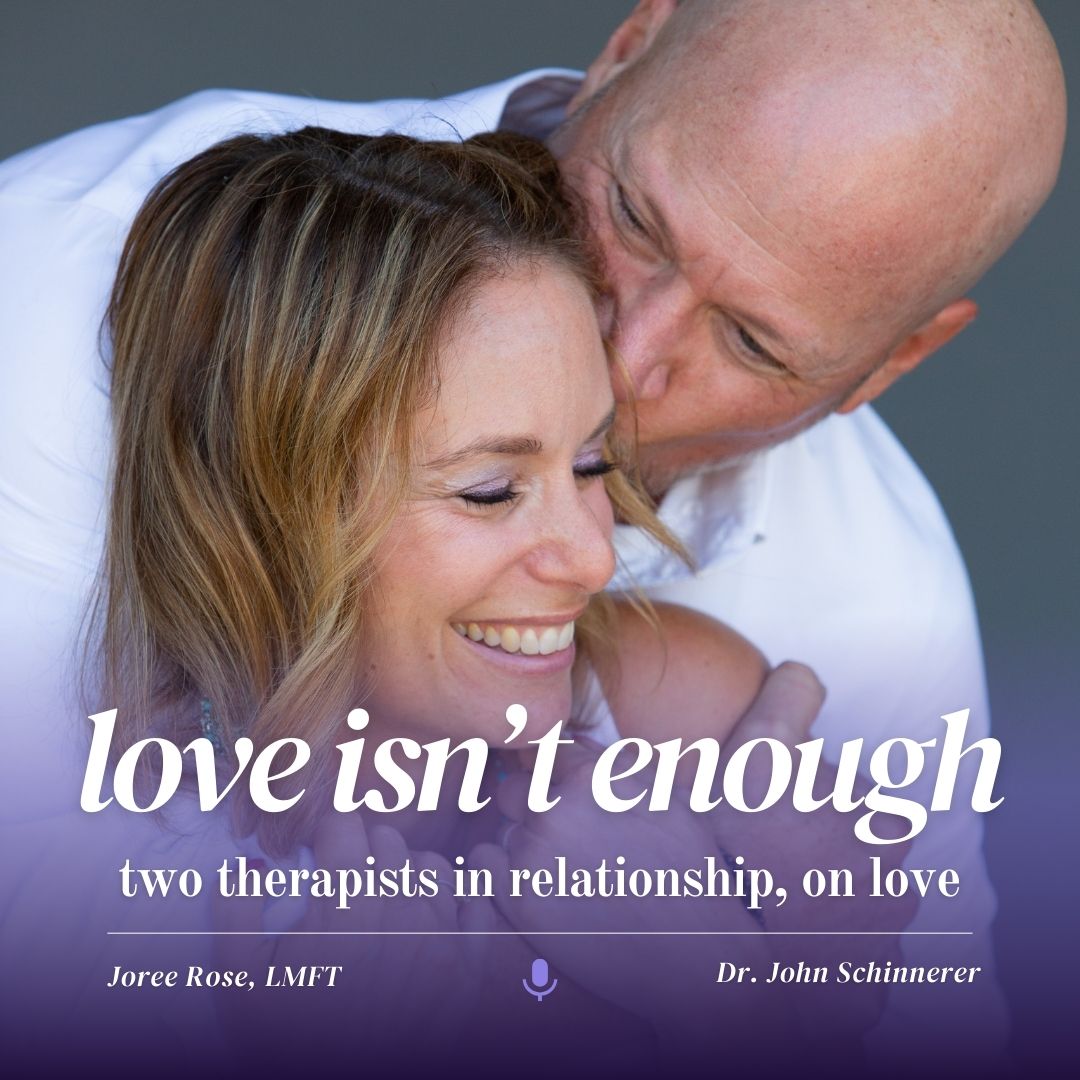
What are love languages? Do love languages truly matter in romantic relationship? What makes you feel loved might not be what your partner needs to feel loved – and that’s where so many couples miss each other. In this playful, practical episode (yes, complete with Joree’s giggles and Dr. John’s faces 🙃), we revisit Gary Chapman’s five love languages – Words of Affirmation, Quality Time, Acts of Service, Physical Touch, and Gifts – and talk through five powerful additional love languages from Dr. Elizabeth Frederick: Consistency, Nurture, Attunement, Vulnerability, and Foreplay (the all-day kind, not just the 10 minutes before sex). You’ll hear real-life examples, how to stop giving what you want and start giving what lands for your partner, and learn simple scripts to ask for love in ways that actually get met. Watch this to discover more proven, practical tools to deepen safety, intimacy, and connection (and have better s*x!).
In this episode, you’ll learn:
Connect with Joree & Dr. John and Love Isn’t Enough:
• Website: www.loveisntenough.net
• Instagram: @loveisntenough33
• Subscribe to their podcast: Love Isn’t Enough
• Join our relationship Master Class series: https://loveisntenough.net/masterclass/
Connect with Joree Rose:
• Website: www.joreerose.com
• Instagram: @joreerose
• Subscribe to her podcast: Journey Forward with Joree Rose
• Join the Podcast Membership: https://joreerose.com/journeyforwardpodcast/
Connect with Dr. John Schinnerer:
• Websites: www.GuideToSelf.com | www.TheEvolvedCaveman.com
• Instagram: @theevolvedcaveman
• Subscribe to his podcast: The Evolved Caveman
If this conversation resonated, here are a few ways to go deeper:
• Subscribe to the Love Isn’t Enough podcast
• Leave a review—Scroll down and click Write A Review. It helps more couples find this work
• Join our Monthly Relationship Masterclass on building an emotionally safe and thriving ‘ship
• Work with us directly in couples counseling or coaching. Email (below) to inquire about availability
About Your Hosts:
Dr. John Schinnerer is a psychologist and executive coach out of U.C. Berkeley specializing in emotional intelligence, anger, the evolution of men, and relational health. He has worked with men and couples for over 30 years. He was an expert advisor on the academy award-winning movie, Inside Out. His online anger management class has taught over 25,000 people how to reduce their anger for a happier, calmer life.
Joree Rose, LMFT is a marriage and family therapist focused on emotional safety, attachment, and healing relationship wounds. she has focused on guiding women to greater life satisfaction and purpose and has written several books.
Full Transcript Here:
Love Isn’t Enough Podcast – Do Love Languages Really Matter?
Joree Rose, LMFT: And welcome back to Love Isn’t Enough. I am laughing because John is making funny faces at himself. If you can’t see this video. You should check it out on YouTube. all of our podcast episodes are available for your viewing pleasure on YouTube. welcome, love isn’t enough.
Joree Rose, LMFT: I am Joree Rose, Licensed Marriage and Family therapist here with my fiancé, my partner in life and love,
Dr. John Schinnerer: Dr. John Schinnerer.
Joree Rose, LMFT: We are always looking for ways for couples to connect deeper for them, to understand each other better, see each other better, feel safe, feel secure, and this entire. Podcast is all about the various ways in which you can do that.
Dr. John Schinnerer: Yes.
Joree Rose, LMFT: And today
Dr. John Schinnerer: that was my contribution.
Joree Rose, LMFT: John agrees. That’s why we’re here today.
Joree Rose, LMFT: We are delving into love languages. We are gonna talk through the Gary Chapman 5 Love Languages. As well as some additional ones that we have come across that I think are beautiful additions. And you and I remember probably eight years ago, like a really long time ago, we’ve been together almost 10 years, so it was fairly early on in our relationship.
Joree Rose, LMFT: And I remember we were sitting in my backyard in the pool. trying to, come up with additional love languages because we knew that those five Oh yeah. There’s your controversial again, I’m just gonna say yes. Throughout this entire episode.
Dr. John Schinnerer: No.
Joree Rose, LMFT: Oh, I was gonna, we were trying to come up with what are the additional love languages that are gonna be true and consistent across relationships.
Joree Rose, LMFT: I think our list is ever growing because I don’t think this is a complete list. I don’t think the five are the only ones. So let’s delve in and I wanna start by naming that people often confuse the idea of love languages in that they think that what they need is what their partner’s gonna need and when in reality.
Joree Rose, LMFT: What we need might be different.
Dr. John Schinnerer: Yeah. And, I think, like we talked to a lot of couples about this, and oftentimes men, for example, are offering acts of service. the five love languages established
Joree Rose, LMFT: we’ll go into this, but just say what you’re gonna say first.
Joree Rose, LMFT: We were just talking about how could not every,
Dr. John Schinnerer: you’re very directive.
Joree Rose, LMFT: Yes.
Dr. John Schinnerer: I was gonna say that men will often put forth acts of service. they’re getting the car washed. They’re cleaning the garage, they’re doing the dishes, and that’s all fantastic. However, if your partner’s love language is not acts of service, then you’re missing a real opportunity to connect and that’s what we often see happening, just as an example.
Joree Rose, LMFT: We see it happen a lot with that disconnection.
Joree Rose, LMFT: So let’s go into what the Gary Chapman five Love Languages are. Do you wanna start?
Dr. John Schinnerer: So the first one is acts of service.
Joree Rose, Marriage Therapist Danville CA: So why don’t you describe what that is?
Dr. John Schinnerer: Acts of service are, I think of as chores around the house or any kind act that you can do to support your loved one, support the household, help ease the mental load, help ease the burden of chores around the house.
Dr. John Schinnerer: Could be picking up dry cleaning, it could be getting the car wash, could be getting the car filled with gas. Could be doing laundry, could be folding laundry. There’s a bunch of things that carpooling
Joree Rose, Marriage Therapist Danville CA: the kids.
Dr. John Schinnerer: Yeah. Picking up kids.
Joree Rose, Marriage Therapist Danville CA: That’s a huge act of service you did For me, early in, in our relationship, I needed extra help picking my daughter up at dance at night.
Joree Rose, LMFT: And I think we were only dating for a year and that was really vulnerable for me to ask. ’cause I felt like this is so not your job and yet you were available and you were helpful and I don’t think it bothered you. But that was hard for me to do. And I think for someone who likes to think I could do it all myself, which is not super relational and tends to be a little bit more hyper individualistic, which was the way I was for many years of my life, learning to ask.
Joree Rose, LMFT: For acts of service to be done was really hard, and then receiving it without feeling guilty was also really hard.
Dr. John Schinnerer: Yeah.
Joree Rose, LMFT: and I had to trust that if you said you would help me, that you actually wanted to help me and that it wasn’t gonna come back and bite me in the ass later around,
Dr. John Schinnerer: used against you.
Dr. John Schinnerer: Yeah. Weaponized. And I think for years I tried to find ways to take. Some of the load of chores and work around the house off of you, because I saw how much you were doing.
Joree Rose, Marriage Therapist Danville CA: And now that we live together, you are a great partner and acts of service. And it’s funny because I wouldn’t say that acts of service is my actual love language, but I sure as hell appreciate it.
Dr. John Schinnerer: Yeah. And that’s an interesting difference too, right? I think we’re talking about ways that you receive love, which is more important than how you give love, right? ’cause receiving love is difficult. Receiving compliments, receiving kindness. Take a look at yourself for the listener and just consider how hard it is and all the things that you do to not truly receive and take in compliments, kindness, love.
Dr. John Schinnerer: but it’s an interesting distinction between. Do you receive love from something like acts of service? And if not, can you still appreciate it? Because we wanna encourage the effort and keep our partner going and doing the things that we want them to do,
Joree Rose, Marriage Therapist Danville CA: especially with acts of service. That’s really one where that defines sharing, like you said, the mental and emotional load of life, the household kids, all of it.
Joree Rose, Marriage Therapist Walnut Creek CA: So let’s go through the other five and we can maybe talk through them. So The other four. Okay.
Joree Rose, Marriage Therapist Walnut Creek CA: Physical touch, words of affirmation, quality, time, and gifts. So physical touch seems like an obvious one but it doesn’t have to be sex. It can be cuddling, rubbing someone’s back, or their feet
Dr. John Schinnerer: Gratitude massage.
Joree Rose, LMFT: Oh, I love those.
Dr. John Schinnerer: Depending on your relationship.
Joree Rose, LMFT: in a loving way.
Dr. John Schinnerer: Yeah. Pulling you close in the kitchen.
Joree Rose, Marriage Therapist Walnut Creek CA: I love that physical touch is one of my favorite is when I’m cooking, you come up from behind me and just kiss me on the neck or gimme a big bear hug from behind.
Joree Rose, Marriage Therapist Walnut Creek CA: Yeah. I love that.
Dr. John Schinnerer: I sneak up and massage your shoulders at times.
Joree Rose, Marriage Therapist San Ramon CA: I love that. Or even just simply walking past one another and reaching out and putting a hand on the shoulder. We see a lot of couples who have disparity in their degree of desire for physical touch.
Dr. John Schinnerer: Some people don’t touch some people overstimulated by touch. So touch would not be their love language, I would guess. but that’s a sad one to me. Like I get it and at the same time it feels it. It’s a hard one for me because touch is so important to me.
Joree Rose, Marriage Therapist San Ramon CA: And we know that physical touch, we are wired for connection.
Joree Rose, LMFT: We can think back to the studies on the cloth monkey. the monkeys went to the cloth mom instead of the mom that gave the milk because they wanted comfort, safety, and security.
Dr. John Schinnerer: yeah. So touch was more important than food, in that instance.
Joree Rose, LMFT: It is quality time. This is a good one to talk through with your partner because my definition of quality time might be very different than your definition of quality time. And yet we see so many couples physically, side by side and completely disconnected.
Dr. John Schinnerer: ask you this, is it quality time if we’re at dinner and we’re both on our phones?
Joree Rose, Marriage Therapist San Ramon CA: Absolutely not.
Dr. John Schinnerer: Why?
Joree Rose, Marriage Therapist San Ramon CA: Because there’s no connection. I actually, and you know this, but I’m with you. Yeah, but you’re not there. I get literally triggered and John has had to almost hold me back, literally, right? This isn’t really an exaggeration. I can get really distracted in frustration and sadness when I see couples at dinner completely disconnected.
Dr. John Schinnerer: Yes. And if I see them or kids on iPod, iPads or phones
Joree Rose, Marriage Therapist Dublin CA: but I see them, on their phones and looking down, my heart just breaks.
Dr. John Schinnerer: And I, get it at some level because I think what we’re dealing with, at least in the states, is a crisis of disconnection, right? Where so many of us feel so disconnected from other human beings, let alone family, friends, loved ones, partners, and we’re all desperately longing for connection.
Dr. John Schinnerer: Our phones have become so addictive that it’s easier to go with the phone than it is to reach out vulnerably for connection,
Joree Rose, Marriage Therapist Dublin CA: quality time is not just being side by side. I think it’s having shared focus and attention on each other or something like watching a movie in which one person is not on their phone.
Joree Rose, LMFT: or distracted or asleep. I used to hate that with my ex that, we would be watching a movie or even at a concert and if he was asleep, it’s like there was no opportunity to have a shared experience. if he wasn’t present.
Dr. John Schinnerer: Yeah. Part of this is shared attention.
Dr. John Schinnerer: And then that’s all, that’s the bids for attention piece too. Correct. Hey honey, let me show you this. Come look at it with me. Come enjoy this with Me.
Joree Rose, LMFT: words of affirmation. Giving positive feedback, telling someone how you appreciate them.
Joree Rose, LMFT: Gratitude, letting them know that you see them.
Dr. John Schinnerer: Letting ’em know they’re beautiful and sexy.
Joree Rose, Marriage Therapist Pleasanton CA: Yeah.
Dr. John Schinnerer: appreciating effort is a big one for me.
Joree Rose, Marriage Therapist Pleasanton CA: Talk a little bit more about that because we talk about that a lot with our clients.
Dr. John Schinnerer: Yeah. I think this is one of the areas that I see a lot of clients missing.
Dr. John Schinnerer: In other words, let’s say, a wife comes in with her husband and she wants her husband to be more emotionally available, more connected, more vulnerable, so on and so forth. And after a couple weeks of meeting with us. She’ll jump on him in irritation, anger, disappointment because he’s not there at the place where she thinks he should be.
Dr. John Schinnerer: So he’s not at the finish line when in fact he’s just starting out learning these new skills. And you know what you want to do is you want to praise the person’s effort. To keep them motivated and keep them working on developing these new skills. What you don’t wanna do is get upset or annoyed with them when they don’t have the skills down as soon as you think they should, because what’s that gonna do?
Dr. John Schinnerer: It’s gonna undermine their effort and it’s going to, they’re just gonna be, they’re gonna shrug their shoulders and say, screw it. It’s not worth it.
Joree Rose, LMFT: Yeah. I also love. This one of the words of affirmation you offer to me a lot is the effort I put into taking care of myself, my physical health, and I’m someone who struggled with my weight the majority of my life.
Joree Rose, Marriage Therapist Pleasanton CA: I’ve never quite felt satisfied in where I’m at with my body, and yet I also work really hard at it and I eat really well, and I exercise quite frequently, oftentimes I don’t feel that my effort results in the outcome I’d like, and yet you are always praising and complimenting my effort, and I love that because it keeps me motivated.
Joree Rose, Marriage Therapist Pleasanton CA: I don’t ever think that you expect me to have a perfect body. That’s not what you’re attracted to. That’s not what you need from me. And yet I see many couples who do I have clients in which the physical body is highly important in their sense of attraction or connection, and bodies are gonna change.
Joree Rose, LMFT: And I think this is one of those really beautiful areas to appreciate effort over outcome. And it can be so simple of, Hey honey, I’m so glad you went to the gym today. Thanks for taking care of yourself.
Dr. John Schinnerer: Yeah. and I think especially with physical body, physical weight, we have some control over that, but not complete control.
Dr. John Schinnerer: Genetics plays a large part in that. my goal with you is always to highlight the effort because I know that’s what you can control. And I appreciate the hell outta the effort you put into taking care of yourself.
Joree Rose, LMFT: Thank you.
Dr. John Schinnerer, Marriage Counselor Pleasanton CA: and it’s,
Joree Rose, LMFT: That’s okay. so the last one is gifts.
Joree Rose, LMFT: And that we feel loved and, these love languages to just reiterate, it’s how we feel seen and loved by our partner when our partner does these things. Receiving gifts, this was never a big one for me. However, I can. Say from my past, the hurt I would feel at the thoughtlessness with gifts.
Joree Rose, LMFT: Like I don’t need big gifts to feel appreciated, loved. I don’t need big birthday things. Quite truly all I ever really want is a massage
Dr. John Schinnerer, Marriage Counselor Pleasanton CA: or a card with a lot of writing in it.
Joree Rose, LMFT: And that really highlights.
Dr. John Schinnerer: Yeah,
Joree Rose, LMFT: words of affirmation and the physical touch. Just gimme a massage and some nice words.
Joree Rose, LMFT: And I am as happy as could be. I don’t need things. I don’t want tchotchkes that I’m just one day gonna have to put in a box and decide to donate. I don’t want you to run out to the Hallmark store the night before my birthday and pick up something chini just because you want something for me to unwrap.
Joree Rose, LMFT: He’s never done that. That was an old past wound. But for some people, gifts are a really big deal. And that being said. I also really appreciate when people put a lot of thought into gifts. And my oldest daughter is one of the best gift givers I know. Very thoughtful. She is so fucking thoughtful with her gifts and it’s less about the thing on that part and more about the thoughtfulness that she puts into it.
Joree Rose, LMFT: She, I have a teddy bear. I’m 47. I still sleep with my teddy bear that I’ve had since I was eight. She actually, a few years ago, went online and found the original bear of the one that I had and got me a bear as a reminder of just my childhood. Just the thought that went into that.
Joree Rose, LMFT: So I’m gonna supersede gifts and the entitle that, love language as thoughtfulness.
Dr. John Schinnerer: Yeah. Or thoughtful gifts. And, we’re talking small gifts here too. Flowers. Candy cards.
Joree Rose, LMFT: but we’ve seen that go awry.
Dr. John Schinnerer, Marriage Counselor Dublin CA: Yeah. And part of it depends upon the lens through which you’re viewing your partner. we have seen it where the lens through which one partner viewed the other partner was, had gone from all positive to pretty much all negative.
Dr. John Schinnerer, Marriage Counselor Dublin CA: And he brought home flowers for her. And her response was like, why’d you get me flowers? I hate flowers. It’s a waste of money. They’re just gonna die.
Joree Rose, LMFT: They’re gonna die.
Dr. John Schinnerer: Like our love.
Joree Rose, LMFT: I wish it did actually on that couple.
Dr. John Schinnerer: be aware of where the lens is through which you’re viewing your partner, we’ve talked about that idea that most relationships end via death by a thousand paper cuts.
Dr. John Schinnerer, Marriage Counselor San Ramon CA: those paper cuts are small, little hurts, annoyances, resentments that accumulate over time. as they accumulate. The lens through which you view your partner goes from all or mostly positive to all, or mostly negative, that’s pretty easily remedied. If you can have a conversation with your loved one and just say, Hey, it seems to me that we’re getting a little negative in our interpretations of each other’s intentions.
Dr. John Schinnerer, Marriage Counselor San Ramon CA: Can we mindfully or intentionally agree to make an effort? To put a positive lens back on and assume positive intent.
Joree Rose, LMFT: Yeah. one of the things that’s challenging is what I might need as my love language might not be what you might need.
Dr. John Schinnerer: Absolutely.
Joree Rose, LMFT: And that the challenge in that is that many people give their partner what they want and they don’t necessarily give their partner what their partner needs.
Joree Rose, LMFT: And so it’s really, helpful. If you haven’t done this already, go to the Five Love Languages website and you can take a little test and it’ll spit out what your top ones are. But I see a lot of couples who actually really don’t have this awareness of themselves or each other.
Dr. John Schinnerer: I think all too often we’re looking at how do I wanna receive love and then I give back what I wanna receive, and we think that’s good enough. But it’s not, again, it’s not about how you receive love, it’s about how your partner. Receives love and it’s about being crystal clear of what their top two love languages are.
Dr. John Schinnerer, Marriage Counselor San Ramon CA: So you can target those and hit the mark and please I’ve had some people say I like all five. It’s about prioritization so that you can be really clear with your partner, what’s the top couple of ways that you receive love.
Dr. John Schinnerer, Marriage Counselor San Ramon CA: And yes, you can always shoot for all five, but you want to have clarity, on what are the top two or three that I’m aiming for.
Joree Rose, LMFT: And it’s again, not common that each couple’s gonna share the same top two, What would you say your top two are?
Dr. John Schinnerer, Marriage Counselor Danville CA: I would say words of affirmation, touch.
Joree Rose, LMFT: Yeah, me too. The acts of service I appreciate, but it’s not how I really feel seen or loved.
Dr. John Schinnerer, Marriage Counselor Danville CA: Yeah. And I also have to say as a caveat to this, that I love this idea and Gary Chapman’s books have gone global and he’s sold tens of millions of them.
Joree Rose, LMFT: Talk more about That.
Dr. John Schinnerer: I can’t speak very specifically to it, but I’ve looked at it a couple times and.
Dr. John Schinnerer: The research from if you practice your partner’s love languages and try to meet those love languages, the increase in satisfaction in the relationship isn’t significant. However, I still think intuitively it makes a great deal of sense.
Joree Rose, LMFT: So it would seem that one of these five that has been most researched might be the words of affirmation in the work of the Gottman’s.
Joree Rose, LMFT: As far as bits for attention, or I guess that would be the quality time and the gratitude and appreciation as words of affirmation. Yes. So maybe parts of those are work in the gottman’s work, but what we see, and John described this dynamic a little bit earlier, but I wanna highlight it. Is couples are missing the mark because I do think a lot of couples are trying to support each other.
Joree Rose, LMFT: I do see a lot of couples working towards their relationship. Is it to the extent necessary for a security and safety in the relationship or from healing a pest wounds? Maybe not, but I do see couples working at it and we can completely miss it if we’re not looking. For what’s the effort my partner’s putting into this relationship and in, I know it’s a very kind of 1950s classic example, but Gary Chapman does give this example in the book where husband comes home from work, mom’s been home with the kids after school doing homework.
Joree Rose, LMFT: mom has cooked wife has cooked dinner. After dinner, a husband gets up, does the dishes, and goes and sits on the couch In the 1950s, he would’ve just sat back in his recliner, but now he’s probably on his phone and the wife is now pissed. And why is she pissed? She wants quality time.
Joree Rose, LMFT: He went to work all day, he did the dishes, he helped clean up, and now he’s just tired and he just wants to zone out. And in her mind, she’s been like, I’ve been doing all this work all day around the house, taking care of the kids. I cooked the meal.
Joree Rose, LMFT: I want someone to connect with me. That is a classic missing of the mark in which we’re both doing really good things for the home, the family, and the relationship, and yet the couple, the relationship doesn’t feel satisfying in that moment.
Dr. John Schinnerer, Marriage Counselor Danville CA: Yeah and if we can move on to the other. Yeah. Love languages.
Dr. John Schinnerer, Marriage Counselor Walnut Creek CA: So there’s five more that Dr. Elizabeth Frederick added, which overlap with some of the ones we’ve thought about in the past. And I think it’s always a good idea to flesh out and look at what are some other possible love languages. I don’t know about how much these are backed up in research also, but I intuitively, I love the idea.
Dr. John Schinnerer, Marriage Counselor Walnut Creek CA: So the first one is consistency. So this is the idea that your actions are more important than your words. Your actions are more important than your words, so I can say I love you. I can say you’re my forever, but if my actions aren’t backing that up, my words become meaningless, right?
Dr. John Schinnerer: Other things in this one are reliability, availability, dependability, and you make yourself available and emotionally present when good things are happening, as well as when difficult things are happening.
Dr. John Schinnerer: You’re consistent. You’re predictable.
Joree Rose, LMFT: That is huge. I think there’s so much value in looking at how consistent are you showing up in the relationship.
Joree Rose, LMFT: we see couples that we work with, couples that we know, in which that’s part of what feels like the crazy making is because there’s so much Inconsistency.
Dr. John Schinnerer, Marriage Counselor CA: and what are the ways that you can be consistent or inconsistent?
Dr. John Schinnerer, Marriage Counselor Alamo CA: To me, off the top of my head, there’s emotionally I can be consistent or inconsistent.
Dr. John Schinnerer: Volatile. physically I’m physically around, I’m present or not.
Joree Rose, LMFT: one that jumps to my mind on this,
Dr. John Schinnerer: what,
Joree Rose, LMFT: and this I see more in the dating world than perhaps couples who are in long-term relationship.
Dr. John Schinnerer, Marriage Counselor Alamo CA: Consistent in communication,
Joree Rose, LMFT: and I see with my clients who are dating and even, I will say, you, my love, we’re great in consistency in our texting communication throughout our entire relationship.
Joree Rose, LMFT: Thank it’s only been a year almost that we’ve lived together. So we were the majority of our relationship waking up. Apart, separate homes, going to bed separately, and the consistency of getting the good morning text. And even after we hung up the phone and you still texted goodnight, I love you.
Joree Rose, LMFT: That created so much safety and security for me. It was predictable, but never an appreciated or even never over expected in a way that. We would never get mad at each other if we didn’t do that. ’cause I was as consistent. But you always were the first one awake. So I always felt so loved when you texted me first.
Joree Rose, LMFT: Like it’s silly. That made me feel, that made me feel so loved. And there were certain times in which maybe we didn’t text goodnight. And Early on in our relationship, before I think we had developed more safety and trust in each other.
Joree Rose, LMFT: We would get a little triggered by that. Yeah, it hurt.
Dr. John Schinnerer, Marriage Counselor Walnut Creek CA: There’s a small sting.
Joree Rose, LMFT: Yeah, it was a little paper cut of did you intentionally not text me goodnight. And so we became aware of if we missed the mark on that, there were times you would go to bed earlier than me.
Joree Rose, LMFT: You woke up earlier. You went to bed earlier. So there were times, and I remember this, especially during COVID, ’cause I was up late at night during COVID with my kids. You would text me goodnight, let’s say around 10 o’clock. I saw it. I didn’t say goodnight right then because I wasn’t going to bed right then.
Joree Rose, LMFT: And then let’s say it was now midnight, two hours later, I’m now exhausted. I don’t even look at my phone before going to bed and I didn’t text you goodnight. And then you would wake up in the morning and feel a little bummed and, hurt that, did I not care about you? Did I not consider you?
Joree Rose, LMFT: Yeah. So I think consistency in texting is a huge part of love languages.
Dr. John Schinnerer: I think that one of the other things that you did, which I love or do, which I love is. You’re emotionally consistent. Like you’re very predictable emotionally, which I appreciate the hell out of because I don’t want a partner that’s emotionally volatile.
Joree Rose, LMFT: And let’s just say I’m emotionally predictable in a balanced way. ’cause you’ve had experience where you had emotional predictability in an imbalanced way in your past.
Dr. John Schinnerer: predictable, So I
Joree Rose, LMFT: So what are other ways that, you know, Dr. Elizabeth Frederick talked about is nurture and. What would be under this category is how you take care of each other’s needs. gentle communication. Having that softened startup, one of my favorite questions to ask couples is, what is your partner’s deepest wound or insecurity?
Joree Rose, LMFT: Because if you know your partner’s deepest wound or sensitive spot, do your very best not to activate it, not to say the thing that’s gonna trigger their old wound or a wound that you’ve created within this relationship. So nurturing their wellbeing, mentally, emotionally, physically, spiritually.
Joree Rose, LMFT: How you protect them, how you look out for them. How are you reassuring? How are you taking care of physical needs? Let’s say when’s sick? How much can you let your partner relax and do nothing knowing they’re not slacking off, but you’re there to support their relaxation? A beautiful job of Yeah, we do is nurture each other’s rest.
Dr. John Schinnerer, Marriage Counselor Walnut Creek CA: And I really like the idea of general communication, of being really careful about how you communicate around your partner’s soft spots. I also like the idea in here of capitalizing or making a big deal of your partner’s good news, like celebrating your partner’s good news.
Dr. John Schinnerer, Marriage Counselor Walnut Creek CA: I also like the idea of, in this category of helping your partner regulate their physiology, helping them to calm down, when they are dysregulated. And I, that’s such a huge. Part to me of a solid relationship.
Joree Rose, LMFT: I love when I witness couples doing co-regulation.
Joree Rose, LMFT: And we actually had a recent experience working with a couple in which one partner was getting dysregulated and the other partner reached out and put their hand.
Joree Rose, LMFT: over their partner’s heart. And it was a beautiful, visual of co-regulation.
Dr. John Schinnerer, Marriage Counselor Near Me: And he held onto the hand on his heart.
Joree Rose, LMFT: and that was so nurturing that she knew what he needed. There were no words spoken about it, there was no request for it. It was a knowing, a deep knowing.
Joree Rose, LMFT: What he needed and what she could do to take care of that need. That was beautiful. I loved that.
Dr. John Schinnerer, Marriage Counselor Near Me: And so the third, one of her five is attunement, which to me is all about presence. And what is presence other than you are here in the present moment where your feet are.
Dr. John Schinnerer: It’s being here, right here, right now. With your partner. I would say a big part of this also is that emotional closeness, which part of that is. Being willing and able to explore the inner world of thoughts and feelings. Also, the inner world of your partner and being curious about that.
Joree Rose, LMFT: We talked a lot about that in our last episode.
Joree Rose, LMFT: Yeah.
Dr. John Schinnerer: And then feeling safe, and again, you’ve heard us talk about this, that to me, the goal and relationship at this point is to create a relationship that is safe and secure because happiness and satisfaction will follow naturally from that.
Joree Rose, LMFT: I think when I hear attunement, I can’t. Think of how to guide a couple in being attuned if they’re not being aware. So to me, at the root of attunement is mindfulness, right? Are you aware? Are you a paying attention? And what are you paying attention to? What are you aware of? Because when I hear attunement, I also think of that is the basis of empathy.
Joree Rose, LMFT: Attuning into someone’s emotional state and having a felt sense of that because you are connected on an emotional, deeper level.
Dr. John Schinnerer: Yeah, I would say it’s really hard to be present. Without some sort of mindfulness practice, right? Because otherwise your mind is gonna be in control of you and it’s gonna take you to a negative past or a negative future without permission, without your knowledge or awareness.
Dr. John Schinnerer, Marriage Counselor Near Me: And once you’re there in a negative past or negative future, you’re no longer here. And you’re not even aware you’re not Here.
Joree Rose, LMFT: the next one is vulnerability, which. I think is a huge, yeah, huge love language and all the work we do with couples. This, I think, hinges upon connection period.
Joree Rose, LMFT: If there’s no vulnerability and no, ability to be open. There’s no connection without vulnerability.
Dr. John Schinnerer, Marriage Counselor Near Me: And interestingly, I would say this also hinges on some sort of mindfulness practice.
Dr. John Schinnerer, Marriage Counselor Around Me: A hundred percent. because you need self-awareness. Pardon me? You need self-awareness in order to know what you’re feeling,
Dr. John Schinnerer: And what you’re thinking. most people I would argue, don’t have the training. To really be aware at a deeper level what they’re feeling or what they’re thinking.
Joree Rose, LMFT: It’s a practice,
Dr. John Schinnerer, Marriage Counselor Around Me: which is funny.
Joree Rose, LMFT: It is, and it, and I think it’s really true. when we’re looking at vulnerability, I think of the iceberg, right? You have the part that’s sticking up above the water. That’s the part you can easily see or tune into that someone doesn’t have to be very aware of.
Joree Rose, LMFT: I’m really interested in what’s underneath. I’m really interested in the inner workings of what are you really feeling and are you feeling safe enough to share that with me? And what am I doing on a daily, weekly, monthly, yearly, lifelong basis to continue to make you feel safe?
Dr. John Schinnerer, Marriage Counselor Around Me: And it’s interesting to me too, because you gotta have the awareness of what you’re thinking and feeling, and then you have to have the courage to share it with your partner.
Dr. John Schinnerer: And a lot of times stuff from your past or our past. Comes in to try and talk you out of sharing it because maybe people have hammered you when you’ve shared your truth in the past. And so it’s interesting because you have to have the courage and the awareness to share it, and then your partner has to work on.
Dr. John Schinnerer: Receiving it well. Receiving it. Nonjudgmentally,
Joree Rose, LMFT: non defensively.
Dr. John Schinnerer, Marriage Counselor By Me: Those take a little bit of practice because again, you wanna reward the effort. If you want your partner to be vulnerable with you, you have to reward them and encourage them when they’re making the attempt, which is courageous.
Dr. John Schinnerer, Marriage Counselor By Me: It takes courage to be vulnerable and share their inner world. You can’t flip out. Lose your shit and start attacking them when they share something you don’t like.
Joree Rose, LMFT: No, it’s gonna shut it off for everything going
Dr. John Schinnerer: forward. And remember emotion’s, just emotion. So you validate the emotion first, if you’ve got a problem with what they’re sharing.
Dr. John Schinnerer:
Joree Rose, LMFT: I wanna just highlight a way of bringing some of these things together from the gentle communication in that nurture category you talked about and bridging that with vulnerability. One of the best ways to help your partner be ready to let them know, hey.
Joree Rose, LMFT: I need you to really be able to be listened and receiving right now is to lead with, Hey, hun, I’m gonna share something that is hard for me and I just wanna let this isn’t easy for me to do, so can you offer some grace as I share it? That would be a beautiful way to practice vulnerability.
Joree Rose, LMFT: Without yet saying what you’re vulnerable about, what you’re really vulnerable. About and having that softened startup, having that gentle communication to not just expect your partner to know how to meet your need, but to request it. Hey, I really wanna be open and I’m scared shitless right now.
Joree Rose, LMFT: So can we just hold this space with some grace?
Dr. John Schinnerer, Marriage Counseling By Me: Yeah, it’s an excellent idea. And the last one is one of my favorites.
Dr. John Schinnerer: Foreplay. What is foreplay? It’s think of day long and biggest. Sex organ in woman is her brain foreplay begins all, it’s all day long. It’s not just the 15 minutes before you go into the bedroom.
Dr. John Schinnerer, Marriage Counseling By Me:
Joree Rose, LMFT: people the two minutes,
Dr. John Schinnerer: 30 seconds.
Joree Rose, LMFT: Hey honey, you ready?
Dr. John Schinnerer: It’s flirting, it’s teasing. It’s playfulness, it’s sharing your desire for your partner throughout the day. Hey baby, I can’t wait to get home to you. I’m really looking forward to making love tonight. and one of the things I wanna compliment you on is.
Dr. John Schinnerer, Marriage Counseling Near Me: The growth you’ve made since we’ve been together in teasing and being teased. Because it makes things so much easier for me and
Joree Rose, LMFT: sexier that you can tease me.
Dr. John Schinnerer, Marriage Counseling Near Me: Yeah. It’s, and to me the teasing and you gotta be careful about teasing. You gotta know what your partner’s limitations are.
Dr. John Schinnerer:
Joree Rose, LMFT: requires safety and security before you can tease
Dr. John Schinnerer, Marriage Counseling Near Me: and you gotta tease gently and you gotta sometimes that takes some fine tuning about where and what you can tease and where and what you can’t. But we’re now at a point where we can tease each other.
Dr. John Schinnerer: And then it’s diffused, it’s done.
Joree Rose, LMFT: Yeah,
Dr. John Schinnerer, Marriage Counseling Around Me: that’s helpful.
Joree Rose, LMFT: And I’m gonna say thank you. I had no option but to learn how to be teased, beacon speaking relationship with you.
Joree Rose, LMFT: and I will give the compliment back to you because. You have gotten less sensitive to being teased as well because I think it was hard for me to be teased sometime because I didn’t feel like I could tease you back. And I think the safer and more secure we’ve gotten in our relationship, it flows easier both ways.
Joree Rose, LMFT: And I think that was some of the hard things I had in the beginning of being teased is ’cause I didn’t feel like I had the freedom to tease you. A teasing didn’t feel safe to me. And I also couldn’t understand how it could be a playful thing and not get hurt. ’cause at times I wasn’t sure what was gonna hurt your feelings or not.
Joree Rose, LMFT: Yeah. but foreplay is an all day long practice. And I’m gonna go back to what I was saying about the consistent communication that’s foreplay. If you are checking in with your partner throughout the day, what’s the message you receive? I’m cared about, I’m being thought of.
Joree Rose, LMFT: That’s loving and ideally can lead to greater intimacy. Uhoh, he’s rolling
Dr. John Schinnerer, Marriage Counseling Around Me: Unless you’re an avoidant attachment style avoidantly attached, in which case the text from your loved one might be irritable. You might be get irritated at it, and that’s, your own work for the avoidant
Joree Rose, LMFT: well, and the anxious might over communicate.
Joree Rose, LMFT: So I guess we gotta overlap some of these theories with each. With each other. One of the
Dr. John Schinnerer: things I wanted to get to on this though, is that foreplay can be. On a number of levels. It can be physical, emotional, spiritual, intellectual, or experiential.
Joree Rose, LMFT: I’m gonna share something really vulnerably, so I invite you, the listener to receive my vulnerability. Working with John, doing these podcasts, doing couples work together is a huge turn on, it lights me up on a physical level, but like as well as a mental level.
Joree Rose, LMFT: It’s an emotional attunement, a mental attunement, a physical attunement, and it’s thrilling as hell to me.
Dr. John Schinnerer, Marriage Counseling Around Me: Yeah, it’s amazing to step out of myself and watch us sometimes.
Joree Rose, LMFT: Yeah. And. It makes me think of that line in the Alanis Morissette song, intellectual Intercourse. I remember hearing that song when I was in college and thinking of that line, and I’m like, what’s that?
Joree Rose, LMFT: and that has nothing to do with physical touch. That is a level of attunement that makes me. Thrilled on a variety of levels
Dr. John Schinnerer: I was just gonna comment on watching us do couples therapy together.
Joree Rose, LMFT: I think it’s not bragging because it’s the result of a lot of hard work that got us Here.
Dr. John Schinnerer, Marriage Therapy Around Me: it’s incredible to watch because it borders on mind reading A big factor there is how well we know each other and how well we can anticipate what the other is gonna say and where they’re going with it.
Dr. John Schinnerer, Marriage Therapy Around Me: But if you take in the complexity of having four adults in a room at the same time with hot emotions running, and you’ve got
Joree Rose, LMFT: two people have hot emotions, you and I might have some triggers from our past to those emotions.
Dr. John Schinnerer: They’ve got their prior hurts, their prior traumas, they’ve got past relationships, they’ve got childhood wounds.
Dr. John Schinnerer: They’ve got all these layers of issues that we’re looking at individually between two people. And then the layers of relational complexity and themes going on between the two of them, as well as all these other things, kids and jobs, and aging parents and financial concerns, whatever you’ve got. So it becomes really, complex.
Dr. John Schinnerer, Marriage Therapy By Me: And so to be able to do. The level of work that we do together is a huge turn on,
Joree Rose, LMFT: We recently, did a six hour intensive with a client and going into that part, of what you’re naming too is the deep trust I have in you that whatever you say. Would be the thing I would back up and support from a professional standpoint and the kind of intellectual volley we can throw back and forth and trusting.
Joree Rose, LMFT: ’cause a big piece of, this foreplay for us is trust. It’s a deep knowing, but it’s a trusting. You got this and I support that.
Joree Rose, LMFT: we were cleaning up dinner the other night and my daughter, who’s 19, currently lives with us and I don’t know, we were doing. Something pretty mundane, but expressing gratitude to one another.
Joree Rose, LMFT: And she’s oh my God, you guys make me sick.
Dr. John Schinnerer, Marriage Therapy By Me: Which I took as a huge compliment.
Joree Rose, LMFT: It was, this is actually how we talk to each other. We tell the other story that we told at that point too.
Dr. John Schinnerer: We were in the car with your aunt and uncle, and we were driving to the city, and at that point I was in that 10 month stretch where I could only see outta one eye.
Dr. John Schinnerer: Really? And so you were driving and I always drove during that time period. Whenever, yeah, whenever you drove for that 10 months. Anything over 15 minutes or so, I’d be like, I would express gratitude. Thank you so much for doing the driving. I appreciate it. And you were like, thank you for not driving. And your uncle in the backseat was just like, oh my God, is this what you guys are always like,
Joree Rose, LMFT: yeah,
Dr. John Schinnerer, Marriage Therapy By Me: Yeah. it’s really effective.
Joree Rose, LMFT: It’s really effective because at the end of the day. Love isn’t enough, and you need to constantly, consistently work towards building safety, security, and connection and these nauseating ways of attuning with one another of communicating, of appreciating, of observing, of gratitude.
Joree Rose, LMFT: These are all love languages.
Dr. John Schinnerer, Marriage Therapy Near Me: There was a guy I was talking to recently, it was in a group of men and he was. Being self-deprecating because he was talking about, describing his love for his wife and he backed off and caught himself and was like love, this is really cheesy.
Dr. John Schinnerer: And I was like, guess what? Love is cheesy. So let’s all get comfortable with being cheesy, because that’s part of being romantic. That’s part of expressing vulnerability.
Joree Rose, LMFT: Yeah,
Dr. John Schinnerer, Marriage Therapy Near Me: Yeah, don’t. Don’t dismiss it because it’s cheesy. Yeah, for sure. And the other, the last point I wanna make is, and the levels of foreplay is the emotions.
Dr. John Schinnerer, Marriage Therapy Near Me: that idea of early on in our relationship, when I would express how I was feeling and share how I was feeling, that turned you on in like inevitably
Joree Rose, LMFT: That was a turn on to start just knowing what you knew, you felt your vulnerability in sharing it, and your knowing that sharing it would be meaningful to me. There was layers within that.
Dr. John Schinnerer, Relationship Therapy Near Me: it happened so often it became a joke.
Joree Rose, LMFT: Yeah.
Dr. John Schinnerer, Relationship Therapy Near Me: Honey, I feel hungry right now
Joree Rose, LMFT: I love this conversation.
Joree Rose, LMFT: I think that, you and I, we practice a lot of these and I encourage. If you and your partner have not figured out, what do I need to feel love? What do I need to feel seen? What do I need to feel safe? Talk through this. Listen to this episode. Take notes on it.
Joree Rose, LMFT: join our masterclass series where we go through 12 different areas for couples to increase connection and deepen their intimacy and safety in their relationship. You can find that out at love isn’t enough.net. Even though it’s a year long series, if you wanna just join one of the episodes or you do the whole year, you get a bonus coaching session with us and you get all the back logged episodes of, the whole series.
Joree Rose, LMFT: And yeah, I hope that this inspired at least one new awareness of maybe ways you can show up and express love and appreciation to your partner.
Dr. John Schinnerer: And if you are interested in working with us in doing couples therapy, you might wanna act quickly because Our available time is coming to a close.
Joree Rose, LMFT: Yeah, we’re almost at a wait list,
Dr. John Schinnerer: we’re trying to help as many people as we can, and we just have that, we’re just limited in terms of our time. The other thing that I just wanna say is thank you to you and thank you to you, the listener. If this episode was meaningful to you, please be sure to share it with someone that you think might enjoy it or need it.
Dr. John Schinnerer, Relationship Therapy By Me: And as always, be sure to like rate and review because that’s how we get the word out and change the world one couple at a time.
Joree Rose, LMFT: Thanks so much for tuning in today.