
How Vulnerability Breeds Connection
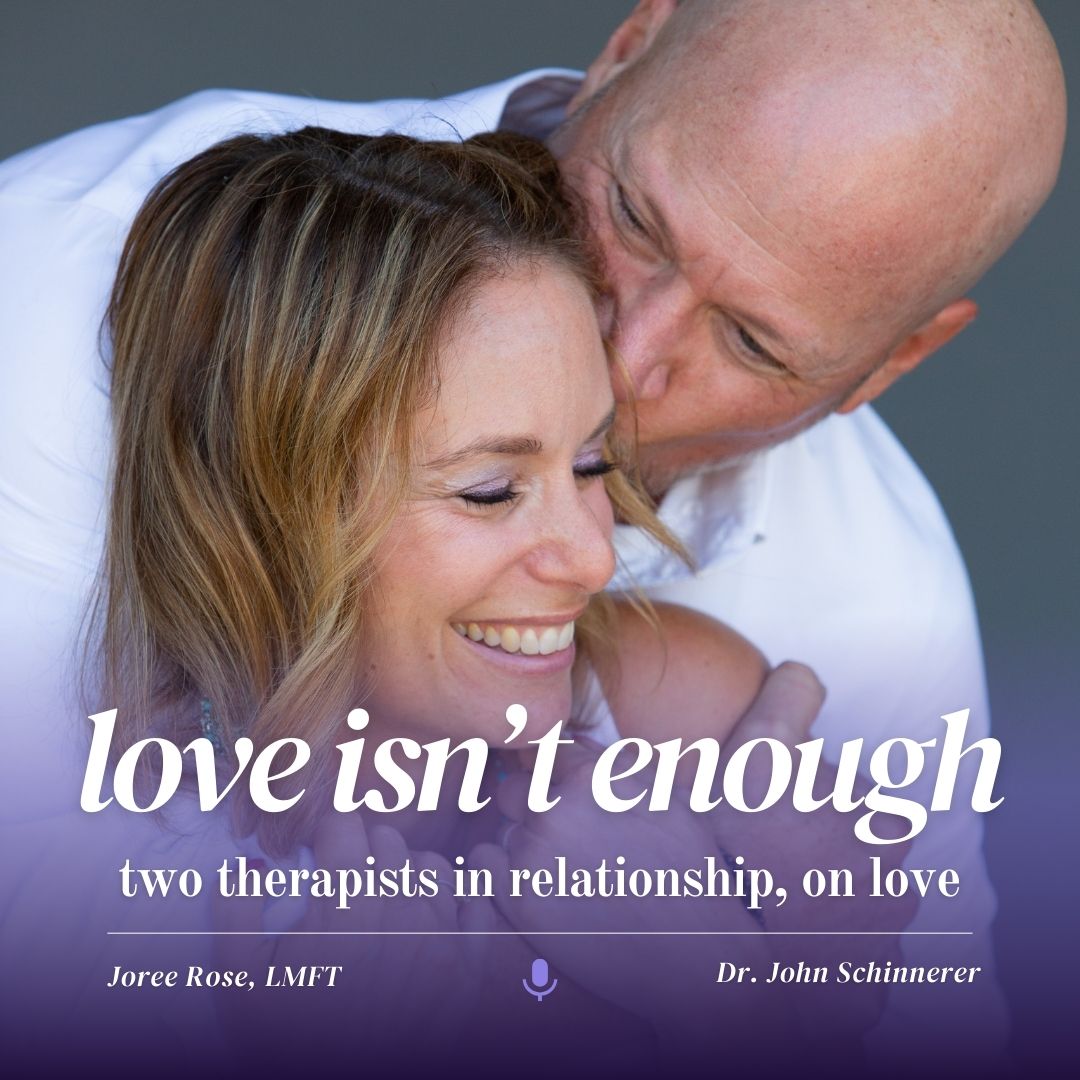
Intimacy isn’t just physical, it’s the courageous act of sharing your inner landscape: the thoughts, feelings, fears, and messy in-between moments most of us keep tucked away. In this candid, funny, and deeply vulnerable episode, Dr. John and Joree unpack why so many couples get stuck in transactional chatter (i.e., fix-it lists, calendars, chores, carpools) and how to shift back into connection through everyday openness and non-defensive listening.
Dr. John and Joree explore what makes intimacy so scary, how the first 90 seconds of your response shapes long-term safety, and why “two conversations” often work better than one: lead with validation, then explain or share concerns later. You’ll hear stories from their work with couples, the power of bearing witness to your partner’s life, and practical ways to make sharing easier, including their favorite relationship card decks. The episode ends with a fun and playful twist you won’t want to miss; you’ll have to hear to believe.
In this episode, you’ll learn:
Connect with Joree & Dr. John and Love Isn’t Enough:
• Website: www.loveisntenough.net
• Instagram: @loveisntenough33
• Subscribe to their podcast: Love Isn’t Enough
• Join our relationship Master Class series: https://loveisntenough.net/masterclass/
Connect with Joree Rose:
• Website: www.joreerose.com
• Instagram: @joreerose
• Subscribe to her podcast: Journey Forward with Joree Rose
• Join the Podcast Membership: https://joreerose.com/journeyforwardpodcast/
Connect with Dr. John Schinnerer:
• Websites: www.GuideToSelf.com | www.TheEvolvedCaveman.com
• Instagram: @theevolvedcaveman
• Subscribe to his podcast: The Evolved Caveman
If this conversation resonated, here are a few ways to go deeper:
• Subscribe to the Love Isn’t Enough podcast
• Leave a review—Scroll down and click Write A Review. It helps more couples find this work
• Join our Monthly Relationship Masterclass on building an emotionally safe and thriving ‘ship
• Work with us directly in couples counseling or coaching. Email (below) to inquire about availability
About Your Hosts:
Dr. John Schinnerer is a psychologist and executive coach out of U.C. Berkeley specializing in emotional intelligence, anger, the evolution of men, and relational health. He has worked with men and couples for over 30 years. He was an expert advisor on the academy award-winning movie, Inside Out. His online anger management class has taught over 25,000 people how to reduce their anger for a happier, calmer life.
Joree Rose, LMFT is a marriage and family therapist focused on emotional safety, attachment, and healing relationship wounds. she has focused on guiding women to greater life satisfaction and purpose and has written several books.
Full Transcript Of This Episode:
The Ways Vulnerability Breeds Connection with Dr. John Schinnerer and Joree Rose, LMFT
Dr. John Schinnerer: Hello everyone. This is Dr. John with my beautiful fiancé, Joree Rose, and you are listening to Love Isn’t Enough.
Joree Rose, LMFT: Wow. You’ve done this intro with just such poise compared to some of our previous episodes where I was thrown right off the bat with your irreverence. You’re about to be too irreverent, so I’m being serious on this one.
Dr. John Schinnerer: So anyway, as I was saying before, I was so rudely interrupted.
Dr. John Schinnerer: One of the main problems that we see as couples counselors is a lack of intimacy. So what is intimacy? Intimacy is your internal landscape of thought and feeling, and I would say in a lot of the couples that we see, primarily, it’s the emotions that aren’t being shared.
Joree Rose, LMFT: Let’s tear this apart a little bit further before going in.
Joree Rose, LMFT: Intimacy is f*cking scary.
Dr. John Schinnerer: Oh yeah. Vulnerability. It’s vulnerability at its peak. And to your point, we see couples not knowing how to have that level of vulnerability. And what we end up seeing is more transactional conversations. We see the outcome of maybe their thoughts and emotions and feelings and decisions process.
Joree Rose, LMFT: It’s a cliché, but true to say the intimacy lies in sharing the journey of your internal world and experience, not just sharing when you’ve arrived at the destination and saying, here’s where I’m at right now.
Dr. John Schinnerer: Yeah. And we saw that with a past client where the wife wanted to witness the. His thinking process and he was explaining that he would share the conclusion of his process with her and she was like, yeah, but I’d really like to know more about how you got there and not for any particular reason other than to get to know him better and how he thinks better.
Joree Rose, LMFT: It’s that sharing of the inner landscape that feels sacred in partnership, that you are the one person I’ve chosen to disclose my inner world to.
Joree Rose, LMFT: In fact, you know what it makes me think about? It makes me think of a previous episode we recorded prior to our Love Isn’t Enough Podcast. When we interviewed our own couples therapist who helped guide us in healing after our breakup, Charlie and Linda Bloom, who are a beautiful couple together for over 50 years, who very much like us.
Joree Rose, LMFT: They share their own vulnerability in their work with their clients. And one of the things that Linda shared was how anxious she used to be to reveal herself.
Dr. John Schinnerer, Marriage Counseling Near Me: Yeah.
Joree Rose, LMFT: To Charlie. And Charlie did an amazing job of accepting Linda in a way that gave her the freedom. To be able to reveal whatever it was she was feeling or thinking without fear of rejection, judgment, not being accepted, or him shutting down and turning away.
Joree Rose, LMFT: Do you remember the phrase that she said?
Dr. John Schinnerer: Yeah, it was a cute line that he gave. He said, “Gimme’ your fears. I’ll eat them up.” Yeah. Something to that effect.
Joree Rose, LMFT: That he will not just honor them, but take them in the wholeness of who she is.
Dr. John Schinnerer, Best Couples Counselor Near Me: And to some extent, destroy them.
Joree Rose, LMFT: And not let them live on because we know that shame can only survive in the dark.
Joree Rose, LMFT: Our fears can only survive in the dark. When we name it, when we speak it out loud, it doesn’t have the same momentum or life to it as when we share what’s going on inside of us. Yeah.
Dr. John Schinnerer, Best Couples Counselor Near Me: And I was sharing with you this morning on our walk that I was reading a newsletter actually from Charlie and Linda.
Dr. John Schinnerer: Linda was writing how she was reading these two books, the Male Brain and the Female Brain. I forget the author.
Dr. John Schinnerer: But she was saying in these books that it’s understandable that men struggle more with sharing this internal landscape, that they have a harder time putting words to it, talking about it, being comfortable with it.
Dr. John Schinnerer, Best Couples Counselor By Me: They’re less familiar with it, I would argue, at some level. And one of the reasons is that women speak. On average much more than men. And the figures from this book were women speak roughly 20,000 words per day, and for men it’s 7,000.
Joree Rose, LMFT: What was my quick response about when you told me those stats?
Dr. John Schinnerer: I think I do 30.
Joree Rose, LMFT: I think I do 30,000 words a day. I talk a lot, but I love it. Just that data because it highlights a yet another difference in which couples struggle, in which they’re not socialized to be on the same playing field, emotionally, relationally, and communicatively, right? And women can interpret the decrease in communication as either he doesn’t care.
Joree Rose, LMFT: He doesn’t care about me, doesn’t feel, doesn’t think, doesn’t have an internal process that is going on inside of him. And clearly as humans, we all have an internal landscape, an internal journey that we are on, and the sanctity of partnership. Is the sacred ability to expose that?
Dr. John Schinnerer, Best Couples Counselor By Me: Well, and ideally in a safe way.
Dr. John Schinnerer, Best Couples Counselor Around Me: The other extension of this idea that women are much more fluent with speech than we are as men, particularly in this area of internal landscape. Is that what Linda was saying in this newsletter, is that women need to practice being more patient. With their male spouse or male partner?
Dr. John Schinnerer: Partner because it takes us longer to come up with the words and it could actually be hours to days sometimes. We know that women can process complex emotions in minutes, seconds to minutes. We’re more like hours to days. And so just to have that patience and also to practice nonjudgmentalness and emotional management skills, when your partner is brave enough to share something.
Dr. John Schinnerer, Best Marriage Counselor Around Me: Something of that internal world with them. We’ve gotta practice, like not getting triggered by what they’re saying, realizing it’s just a thought or a feeling. Because I as we’re talking about this and being vulnerable and being intimate in relationship, I also have a bunch of couples in my mind that are coming up where it’s just not safe to be intimate and vulnerable.
Dr. John Schinnerer, Best Marriage Counselor Around Me: Because if you bring something up, you’re gonna get slammed or criticized or judged, or negativity bias or any number of things.
Joree Rose, LMFT: right? It’s so easy to feel shut down as soon as we expose ourselves. It’s that immediate response, right? It’s like harnessing the. Data from the Gottmans about that first 90 seconds.
Joree Rose, LMFT: I’m gonna just paraphrase and what they talk about is really in an argument that first 90 seconds will be indicative of their relationship in six years. But I take that to just the importance of that immediate response as it translates to the emotional safety down the line.
Dr. John Schinnerer: Yeah. There’s, oh, go. I
Joree Rose, LMFT: was just gonna say one more thing to it. I’ve had experience in which I have been told information that, sure, of course I’ve had emotion, thought, perhaps even concern or judgment about, but if I lead with that, the ability for the other person who’s telling me this to feel safe, secure, and confident to come to me again, would definitely decrease if that’s what I led.
Joree Rose, LMFT: So I’m thinking about a particular example that I don’t need to share the details, but in which I responded with, “Thank you so much for sharing. I appreciate you felt safe enough to tell me that later on I can address the concern without it being the initial response.” ‘Cause that immediate response is the make-or-break moment of “Do I feel safe and am I gonna do this again?”
Dr. John Schinnerer: Yeah. I can’t tell you how often these days I’ve been talking about it. It’s all about having two conversations.
Dr. John Schinnerer, Best Marriage Counselor By Me: You think of non-defensive listening, right? So you listen non-defensively. You don’t explain what you were thinking or trying to do, or how you were, why you were acting that way.
Dr. John Schinnerer, Best Marriage Counselor By Me: And then you have a second conversation later after you validated the emotion, after you’ve dialed down the emotional intensity and follow that up with, “ Hey honey, here’s what I was thinking. Here’s what I was trying to do. Here’s my explanation. And it’s the same thing here, right?” You wanna listen nonjudgmentally at first and be open and curious, and then if you’ve got concerns about what was shared with you, then you have a follow-up conversation.
Dr. John Schinnerer: Exactly.
Joree Rose, LMFT: And as we’ve talked about so much on the podcast, about the patterns of repair, if it’s coming from a place of conflict, generally that repair is gonna happen again. And again, and the more you can have the conversation, the more psychological distance you have from the trigger, the more safe you feel in dissecting it.
Joree Rose, LMFT: We are reiterating something so powerful here of the power of continuing to communicate. But one thing I just wanna add on, it makes me think with that information Linda shared in her newsletter of some of Brené Brown’s work regarding how many emotions men and women can feel.
Joree Rose, LMFT: What is that face you’re making?
Dr. John Schinnerer, Best Marriage Counselor Around Me: See. There was the irreverence. I was just, I was smiling at myself and seeing myself reflected back in the video and wondering, is this narcissistic? I was going to say I’m actually a narcissist right now.
Joree Rose, LMFT: Hold on. Were you, listen to what I was saying?
Dr. John Schinnerer: Mostly.
Joree Rose, LMFT: Huh? See, there’s the irreverence.
Dr. John Schinnerer, Best Marriage Therapist Around Me: See, that was that extra 10,000 words right there. We just flopped them off the end. Hey, I’m sorry. Saying something super important.
Joree Rose, LMFT: Brené Brown’s research, Brown.
Joree Rose, LMFT: Here we go. I believe it’s Brené Brown who talks about how many emotions men can name and experience versus women. Do you remember that
Dr. John Schinnerer, Best Marriage Therapist Around Me: research there? There are a few different ones. On average, people can name three emotions in their body. I think that’s Brené Brown, right? The other one is something about women on average can name 14 if I remember.
Dr. John Schinnerer, Best Marriage Therapist Near Me: Yeah. 14 and men are seven, 14 to 15 emotions, and men can name five to seven.
Joree Rose, LMFT: Yeah.
Dr. John Schinnerer: But the funny, the fun part is asking men to name positive emotions. Come on right up, rattle ’em off. Go. Happy.
Joree Rose, LMFT: That’s it. Okay. Coming back to the topic at hand.
Dr. John Schinnerer, Best Marriage Counselor Near Me: Yes.
Joree Rose, LMFT: Why does this matter? What we’re seeking to do in this podcast, in our work, in our own relationship with each other is create opportunities for safety, create opportunities for deeper connection, getting out of transactional conversations.
Joree Rose, LMFT: I can’t tell you how many clients I’ve talked to about the importance of having non-transactional conversations.
Joree Rose, LMFT: What does that even mean? Conversations that extend beyond the carpool line. Dinner, kids’ homework. The chores, the bills, who’s attending which soccer practice. Couples so easily get stuck in a wash, rinse, repeat of the details of their lives, and when they have the opportunity to sit down and perhaps open up, they don’t know where to start.
Dr. John Schinnerer, Best Marriage Counselor Near Me: And consider that at the beginning of your relationship. You guys peppered each other with questions. You are really interested in each other and wanted to get to know everything about them. And then somewhere along the line it just stops. Usually when kids come along, I think, ’cause we get busy, then we
Joree Rose, LMFT: get too comfortable and we make the assumption.
Joree Rose, LMFT: I know you.
Dr. John Schinnerer, Top Marriage Counselor Near Me: Yeah. And so I, what happens is we stop getting to know our partner, but the partner changes over time. ‘
Joree Rose, LMFT: because we grow and change ideally.
Dr. John Schinnerer, Top Marriage Counselor Near Me: So we, we came.
Dr. John Schinnerer, Top Marriage Therapist Near Me: So what we’re going to do today is we’re going to play one of these card games. Jo and I talk a lot about card decks and the questions on them, and there are a number of them, Mr.
Dr. John Schinnerer, Top Marriage Therapist Near Me: Perel and the Gottmans. And we’ve come across it Human. This is a good one here called Tails. But prior to that, one of the things that sparked this whole thing was we came across a movie clip from Shall We Dance? It’s Susan Sarandon talking with, was it Kevin Jenkins? I think that’s his name.
Dr. John Schinnerer, Top Marriage Therapist Danville CA: I recognize him. I don’t know the name very well, but they’re having a conversation and she asks him, why do you think we get married?
Joree Rose, LMFT: So I’m going to read this quote.
Dr. John Schinnerer, Top Marriage Therapist Danville CA: Yes.
Joree Rose, LMFT: And so she asks, why do you do a
Dr. John Schinnerer, Top Marriage Therapist Walnut Creek CA: Susan Sarandon voice? It’s very sexy.
Joree Rose, LMFT: It’s very sexy and sultry. I don’t think I can embody that at the moment that my smoker voice.
Joree Rose, LMFT: Yeah. Yeah. I don’t think I can do it. Okay. But he. When she says, why do you think people get married? He responds immediately with their, the answer of passion, and she says, no, that’s not it. What she says is, people get married because we need a witness to our lives. There are 8 billion people on the planet.
Joree Rose, LMFT: What does any one life really mean, but in a marriage, you’re promising to care about everything, the good, the bad, the terrible things, the mundane things, all of it. All the time, every day you are saying your life will not go unnoticed because I will notice it. Your life will not go unwitnessed because I will be your witness.
Dr. John Schinnerer, Top Marriage Therapist Walnut Creek CA: That’s it, it’s a beautiful quote. Stunning. It’s a
Joree Rose, LMFT: beautiful quote. And yet it also makes me think about the Brené Brown quote that she says in her Netflix special called A Courage in which she says, we all want to be loved, but we’re afraid to be seen.
Dr. John Schinnerer, Top Marriage Therapist San Ramon CA: Yeah.
Joree Rose, LMFT: We’re free to be seen because we’re afraid, if we expose ourselves, I’m going to be rejected and what’s she
Dr. John Schinnerer, Top Marriage Therapist San Ramon CA: talking about with being seen, but vulnerability.
Joree Rose, LMFT: Vulnerability. And how do we practice vulnerability?
Joree Rose, LMFT: We start small with so yeah, go a little bit further out there for a second before we jump into playing our card debt game.
Dr. John Schinnerer: Vulnerability. I think when you start practicing vulnerability, you want to start with people that you know are safe, relatively, and you can start relatively small.
Dr. John Schinnerer: I was scared to go to class today, or I was really nervous doing that presentation today, or I got really angry when that guy cut me off on the freeway. So you start small with just how you feel about things, and you can ratchet that up to what you need and make requests for what you need. But then ultimately you want to get into I believe, sharing some of your deepest challenges.
Dr. John Schinnerer, Top Marriage Therapist Pleasanton CA: Fears, concerns, anxieties, insecurities, all the stuff that at some point in your life you didn’t want anyone to know about. Because part of the reason you want to do that is it gets it out. It gets it unstuck. It’s like cleaning yourself out.
Joree Rose, LMFT: I went on a little tangent in my mind as you were talking, even though I was fully listening.
Joree Rose, LMFT: Were you listening? I was fully listening. But
Dr. John Schinnerer, Top Marriage Therapist Pleasanton CA: what does it mean you got 7,000 words a day?
Joree Rose, LMFT: What it made me think about was how in awe I was of you early on in our relationship and you would share with me what you were feeling. And it was such a turn. It was such a turn-on. I won’t share the exact words I used to say.
Joree Rose, LMFT: Yeah.
Dr. John Schinnerer, Top Marriage Therapist Dublin CA: However, the theological response,
Joree Rose, LMFT: however, it was a departure from my experience in the past in which men would express themselves and it was exciting to the point where John could just say, I feel hungry, and it would be mocking the. Ability of what vulnerability can do for a woman, for a partnership.
Joree Rose, LMFT: Really, I
Dr. John Schinnerer: think that’s a really good example because it indicates that these words connect us. The sharing of our internal landscape, of our feelings, of our thoughts connect us mentally, emotionally, and even physically.
Joree Rose, LMFT: Yeah, a hundred percent. It is powerful. So if you follow us on Instagram, you’ll see that oftentimes we’ll go out for date nights and we grab a couple of cards from a particular card deck and pop ’em in my purse and take turns reading them.
Joree Rose, LMFT: We’ve gone through almost the entire box, which is pretty big for Esther, pers. Where should we begin? I thought it was a huge turn-on when John bought a card deck. On his own and just said, “ Hey honey, look what I bought today.” That was exciting because it was the belief that I’m not the only one driving.
Joree Rose, LMFT: This is another huge turn-on for women. So men, listen, you want a really easy way to turn on your wife?
Dr. John Schinnerer, Top Marriage Counselor Dublin CA: Yeah. Go get a deck.
Joree Rose, LMFT: Go get a card deck and be open and curious to answering questions. We’ve gone to wineries for music performances where we get to sit and listen to live music or have a great meal.
Dr. John Schinnerer: Wait. So we sat at a bar recently and had a drink at a nice Chinese restaurant, and the bar was pretty crowded, so there was a,
Joree Rose, LMFT: we were like at the ca, the corner of the bar. So John was like elbow to elbow with another man. Yeah, I was,
Dr. John Schinnerer, Top Marriage Counselor Livermore CA: gonna say, there’s an older gentleman next to me, but at this point I’m 58, so I don’t even know if that’s true.
Dr. John Schinnerer, Top Marriage Counselor San Ramon CA: He might have been younger,
Joree Rose, LMFT: than you. He was with his wife, an adult child. Okay. You have a short child. So anyway,
Dr. John Schinnerer, Top Marriage Counselor San Ramon CA: he was a gentleman about my age and we had these cards out and I asked this question about jewelry. So I think the question was, “ How could you improve my, how could you get better at communicating with me?”
Dr. John Schinnerer: Or how could I get better at communicating with you?
Joree Rose, LMFT: Yeah. It was about improving communication.
Dr. John Schinnerer: And this got the guy’s attention. Like he’s leaned in, was like, oh,
Joree Rose, LMFT: he saw that we had a pile of cards and that we kept pulling cards and he looked down and he could read it. Yeah. So he knew. And he was close.
Joree Rose, LMFT: You guys were at the corner, so you guys. Yeah. Elbow to elbow. So again, he was likely hearing our entire conversation. Yeah. But this question comes up and we both
Dr. John Schinnerer, Top Marriage Counselor Dublin CA: tuned in later. Yeah. It was like, how’s this gonna go? And
Joree Rose, LMFT: it was both. An interesting observation in him. I saw as a deep curiosity uhhuh in what was gonna go on with us
Dr. John Schinnerer, Top Marriage Counselor Dublin CA: and an expected horror
Joree Rose, LMFT: and a combined projection of, oh shit, I would not wanna be them right now.
Joree Rose, LMFT: Going through this being confronted to answer this question, how could I better improve communication? Yeah, it was hilarious and this was awesome. So I don’t think I had much of an answer. Oh no, I did. I think I did have an answer for you. I sometimes have the perception that there could be a perfect way John could communicate, and in that perfect way, I would have an easier time receiving it.
Joree Rose, LMFT: What that looks like is maybe if the words were slightly different or the timing was slightly different,
Dr. John Schinnerer: or the tone of voice or the volume or the body language. Oh
Joree Rose, LMFT: fuck.
Dr. John Schinnerer, Top Marriage Counselor Danville CA: Or the phases of the moon.
Joree Rose, LMFT: I really need each on our, so I really work hard because I value when John brings things up and it’s my job to support the behaviors I wish to continue to see and not.
Joree Rose, LMFT: Criticize and I’m not allowed to criticize. I’m not one to like to really shut down quickly and I could say it in a really soft and gentle tone, but that was hard to hear. If you maybe said this at a different time, I would’ve had an easier time responding, and it still somewhat criticizes your intentions, so I’m sorry about that.
Joree Rose, LMFT: Well,
Dr. John Schinnerer: and you do a great job of it. How you bring it up too,
Joree Rose, LMFT: and yet it still might diminish your efforts if I’m not receiving it. Yeah. At times
Dr. John Schinnerer: it still hurts me, especially with that older relationship 1.0 where I was more wrapped up in “ I never do anything. I can’t get it out of your old stories. Those old wounds. Yeah. So here we are at the bar. This question comes up right now. I’ll hand it back to you.
Dr. John Schinnerer, Top Marriage Counselor Walnut Creek CA: Okay. So I said, actually, I’ve got an answer for this one. And I said, you remember the other day we were in the car, we were driving to the city, and we had that conversation about our daughters.
Dr. John Schinnerer: And it’s always an emotionally laden conversation as stepparents or in a blended family to talk about the other’s kids. And so I brought it up gently. We worked our way through it. It went really well, actually. And at the end of it, you said something like “ love it would be easier for me.” Or it might have been better.
Dr. John Schinnerer: I can’t remember if you had brought this up on the way home from the city rather than going to the city.
Joree Rose, LMFT: I was worried that the onset of the conversation could have been difficult and it could have caused us some disconnection and it could have potentially ruined our afternoon out. Luckily, none of that happened, but in my mind,
Joree Rose, LMFT: there was a better time to do it, which was at the end of the day, not the beginning. And it ultimately didn’t matter, but that was the story I was telling myself.
Dr. John Schinnerer, Top Marriage Counselor Walnut Creek CA: And that’s what I said. I said so it ended up not mattering. That we got through the conversation fine.
Dr. John Schinnerer, Marriage Counselor It was no big deal. It didn’t end up negatively impacting the day at all. So that was this story that you were telling in your head that never came true. It was a fear. And I said, so it would help me if you could work. To not nitpick or not criticize me on these minor points when I have the courage to bring something up.
Joree Rose, LMFT: So here’s the thing, because we were playing this card debt game, which the whole intention of the quote game is to win.
Joree Rose, LMFT: No, it’s not to win, it’s to answer the question honestly, authentically, with love and truth and honesty and all the things, right? Because we were playing the game. I was able to receive the feedback that John was requesting of me with zero defensiveness, like actually zero defensiveness, and I was amazed because it was a gamified response to a concern you actually had.
Joree Rose, LMFT: I was able to be really pleased at how honest you were at playing the game. It made it a lot easier for me to receive, not get defensive, and actually have a greater ability to self-reflect and be like, wow, you know what, love, you’re right. I will look at that and thank you for bringing that up.
Dr. John Schinnerer: And that’s how you came to the realization that, oh my God, I have this belief that if John just brought up something perfectly, then I wouldn’t have a hard time receiving. Right. And so then it was funny because it became this like meta game playing idea of. I’m gonna we, next time you have a concern, write it on a little piece of paper, the same size of these cards, slip it into the deck, pull it out, and name your concern in the form of a question that we can talk about.
Joree Rose, LMFT: And because we’ve agreed to this, to the rules of this game, playing these card games that we’re here to talk deep, to get vulnerable, to share our inner world. That’s an easier way to approach some of those things. And while it was a joke, it was, I was also serious about it’s hard when maybe you’re taken off the track of where you’re at in your day and these hard conversations happen, but truly entering into the mind space of we are here to communicate vulnerably and deeply and honestly for the purpose of deeper connection and knowing each other’s inner world.
Dr. John Schinnerer, Marriage Counselor I’m just thinking you’re using up your 20,000 words.
Joree Rose, LMFT: I’ll stop talking.
Dr. John Schinnerer, Marriage Therapist: Oh, wait, so I got it. I got a great idea.
Joree Rose, LMFT: That wasn’t that powerful though.
Dr. John Schinnerer: Yeah, it was powerful. Okay. Never using up my 20,000 words. I have so many important things to say.
Joree Rose, LMFT: Although, tell them what my mom used to tell me when I was growing up, when I was a kid.
Joree Rose, LMFT: No, I got a
Dr. John Schinnerer, Marriage Therapist: great idea. I gotta share it first.
Joree Rose, LMFT: Okay.
Dr. John Schinnerer, Marriage Therapist: I think, and you heard it here first. Oh. And this is my declaration of intellectual property. That we are going to combine strip poker with a card deck for couples, and every answer you get to take off a piece of clothing.
Joree Rose, LMFT: Okay. Now we are combining a lot of emotional fears combined with a safety ’cause for some couples that would, of
Dr. John Schinnerer, Relationship Therapist: Of course, some couples would melt.
Dr. John Schinnerer: Sorry, John. Not.
Joree Rose, LMFT: Everyone is as safe in their sexual relationship as we are. No, but that’s the goal. Not everyone actually wants that safety, to be honest. Safety is the goal. Yes. But not everyone wants a sexual piece. Like a book game. It’s really simple.
Dr. John Schinnerer: If you don’t like our podcast, don’t listen to the podcast.
Joree Rose, LMFT: Can you, can we go back to how I’ve always talked a lot? Yes. And then what?
Dr. John Schinnerer, Relationship Counselor: Oh yes. Yes. How you used to fall asleep talking and wake up in the morning finishing a sentence.
Joree Rose, LMFT: That’s what my mom used to say about me. And then John moved in with me. He’s oh my God. This might have been the thing your mom was right about.
Dr. John Schinnerer, Relationship Counselor: So you might be like a million.
Joree Rose, LMFT: No comment.
Joree Rose, LMFT: Okay, so I hope that we’ve inspired you to understand the value and importance of why sharing the inner world matters. It deepens connections, creates emotional, mental, physical, spiritual safety, allows you to see who your partner is in the here and now, so you don’t get overattached to who they were when you met.
Joree Rose, Therapist for Women: Curiosity, we’ve been together almost 10 years now, and it’s easy for me to believe I know everything about you, and yet sometimes these cards are like they spur a memory of something. That goes into storytelling about something we would’ve never thought to share.
Dr. John Schinnerer: And we’ve been through these decks so often, which is, I don’t know if that’s great or just embarrassing.
Dr. John Schinnerer, Psychologist for Men: We’ve been through many of these cards two or three times, and so I think that’s part of the challenge is so I remember looking at a card being like, okay, wait, no, she knows that first story. Yeah, she probably knows that story too. And I was coming, going through can I come up with a story that you don’t know that answers the question, which I think is great. ’cause again, it goes a little bit deeper into getting to know me.
Joree Rose, Therapist for Women: Last thing I’ll say, before we jump into actually pulling some cards and we’re gonna prove to you that we are pulling cards at random, we did not. Predetermine what cards we’re pulling.
Joree Rose, LMFT: So we’re gonna be on the hot seat here, but this also tracks back to the research of the Gottmans in what they talk about, their sound relationship house theory, similar to Maslow’s hierarchy of needs that you need to have a strong foundation to be able to rise higher to shared values and vision of the future and the foundation of that sound relationship house theory is what they call love maps.
Joree Rose, Therapist for Marriage: Which is getting to know your partner in the here and now. And one of the things I remember probably from 25 years ago in graduate school learning about the Gottmans and these love maps was this idea that couples like you said earlier, John, ask each other questions early on in dating and then stop asking questions.
Joree Rose, Marriage Therapist: We grow, we change. And the example they had given was 10 years into a relationship. One partner comes home with. A tub of ice cream and says, Hey honey, I brought you your favorite ice cream here. Here’s a pint of chocolate chip. And the other partner gets all pissed and was like, I haven’t liked chocolate chip in years.
Joree Rose, Marriage Therapist: Do you even know me? Do you even love me? And. She likely, I’m assuming it’s her who got pissed about that. She likely has changed her favorite flavor of ice cream, maybe two, maybe three times and hasn’t thought to share it with him. He’s going off of something. He thought he was being kind and generous and thoughtful and gets tagged for you.
Joree Rose, LMFT: Don’t you care? You don’t know me. Do you even love me? Have you ever known and loved me?
Dr. John Schinnerer, Psychologist for Men: Even though he had a kind intention?
Joree Rose, Marriage Counselor: Exactly. So you can even see where we grow and change. We don’t often think about what to share. Okay, let’s get
Dr. John Schinnerer: to the cards.
Joree Rose, Marriage Counselor: So if you’re watching the video here, I’m showing you the card deck.
Joree Rose, LMFT: We have the Couples edition of Tales. This actually popped up on my Instagram as an ad and I’m pleased it did because
Dr. John Schinnerer: we have no financial investment in this company.
Joree Rose, Couples Counselor: But Tales, if you’d like us to sponsor us, we will happily do this more often. Okay. Do you want me to pull the card first?
Dr. John Schinnerer, Men’s Psychologist: Sure.
Joree Rose, Couples Counselor: Okay, here we go.
Joree Rose, Couples Counselor Danville CA: Some of these things are random and seem silly, but it’s all good.
Dr. John Schinnerer, Men’s Psychologist: Is that your favorite lawn ornament?
Joree Rose, Couples Counselor Danville CA: Garden gnomes?
Dr. John Schinnerer, Men’s Therapist: Yes.
Joree Rose, Couples Counselor Danville California: Oh, I knew that answer. Okay. Here’s the question.
Joree Rose, Couples Counselor Danville CA: What was your favorite game to play at recess?
Dr. John Schinnerer: It depends on what age, but I could go with four-square soccer tag.
Dr. John Schinnerer, Men’s Therapist: It. There’s another one that we used to love playing, but I can’t say it because it’s not politically correct for the name. Okay. It was smear the, and it rhymed with smear and it was the dumbest game ever. Someone would have the football and there’d be a group of like 10 boys and whoever had the football would run for his life.
Dr. John Schinnerer, Men’s Counselor: Everyone else would try and tackle
Joree Rose, Couples Counselor Walnut Creek CA: chase him, and then
Dr. John Schinnerer: once they tackled him, he’d throw the ball up in the air. Someone else would get it and he’d run.
Joree Rose, Couples Counselor Walnut Creek CA: Sounds like sharks in minnows, but in a mean way.
Dr. John Schinnerer, Men’s Counselor: Yeah. It’s the epitome of the man box. Yeah. Recess game, I think.
Joree Rose, Couples Therapist Walnut Creek CA: Okay. I kinda love this question because it instantly brought me back to my elementary school playground.
Joree Rose, Couples Therapist Walnut Creek CA: I had a couple of favorite games to play at recess. One was handball ball, that big red ball, bouncy ball against the, those were the best. Those were the best. Similarly, with that same ball you would play Foursquare. Loved four. I was actually a foursquare tetherball. Oh, I was really good at tetherball too.
Joree Rose, Couples Therapist Lafayette CA: I loved tetherball. Okay, but the last one.
Joree Rose, Couples Therapist Lafayette CA: Yes, I’m short, John. I could duck under the tether ball very easily, but I had a really good grip on it. I can get it to go really hard. I loved playing kickball.
Dr. John Schinnerer, Counselor for Men: That’s a good one. Yeah. Kickball was great. Again, all with that red ball, that red
Joree Rose, Couples Therapist Berkeley CA: bouncy ball. So maybe the goal of a ball is to go get a red bouncy ball.
Dr. John Schinnerer: Yeah.
Joree Rose, Couples Therapist Berkeley CA: We once were playing butts up, which was like handball against someone’s garage. And. If you got tagged, you’d have to go stand with your stomach to the garage and your butt facing out, and the people try to tag your butt. I remember one time, so I’m still on my cul-de-sac, I was in fourth or third or fourth grade, we’re playing this in someone’s driveway, and this kid was up against the garage, and this was before roll-up garages were popular, and the garage opened, and this kid got totally bumped from the garage as the garage tried to open.
Joree Rose, Couples Therapist Oakland CA: That was great. Okay. Last one I really loved. Okay. I think we named all childhood games.
Dr. John Schinnerer, Counselor for Men: No, we didn’t do Red Rover. I thought. Nice.
Joree Rose, Couples Therapist Virtual: I loved Red Rover. That was
Dr. John Schinnerer, Therapist for Men: a great game.
Joree Rose, Virtual Couples Therapist: I also hated when I couldn’t break through.
Dr. John Schinnerer, Therapist for Men: Yes. It’s not a good feeling.
Joree Rose, Online Couples Therapist: I know. It sucked. Yeah. The thing I hated the least about games at recess was when they would pick teams and I was like always the last to get picked because I was not athletic and I was overweight.
Dr. John Schinnerer: Yeah, that, that’s probably the root of some wounds.
Joree Rose, Online Couples Therapist: Okay.
Dr. John Schinnerer: Okay. Next question.
Joree Rose, LMFT: Hold on. Hold on. Thank you for sharing.
Dr. John Schinnerer: Oh, you’re welcome. Thank you for sharing.
Dr. John Schinnerer: What were some of the major turning points in your life that got you here?
Joree Rose, LMFT: Ooh.
Joree Rose, Online Marriage Therapist: I would say I do know, and if you’ve listened to me on my podcast, Journey Forward with Joy Rose. Nice little shameless plug there. My biggest life turning point was when I was on a retreat with Dan Millman, who’s a well-known author and spiritual teacher, and we were given the opportunity to break a board and it was like a martial art style, breaking a board.
Joree Rose, Online Marriage Therapist: And I told myself, I can’t do this, I can’t do this, I can’t do this. And we told, we were told we were given one chance to break the board. And I get up there, it’s my turn, he’s guiding me through it. Everyone’s chanting my name. I didn’t do it. And I was like, see, I told myself I couldn’t do it. I was right and I felt full of shame and embarrassment.
Joree Rose, LMFT: ’cause out of a group of 60 people, I was one of six. And these people’s age ranges were like 80. Down to 18. Like literally there was like some really old lady there, and I was one of six people that didn’t break the board. Now we were given options of what kind of weight of board we wanted to break a light, medium, or hard.
Joree Rose, Online Marriage Therapist: The medium was the equivalent of a real piece of wood, but these were like plastic interlocking boards to be able to reuse. And the way it was positioned was there were two cement blocks with this board across the top and a purple meditation cushion underneath. And when I got up there and I didn’t break it, I had everything focused.
Joree Rose, Online Marriage Counselor: My energy, my gaze, my attention on that board. I didn’t break it. I was full of shame. Everyone went. And then Dan Millman finally says, okay, raise your hand if you didn’t break the board. And I raise my hand sheepishly and he says, okay, I’m gonna give you one more chance. So then I had to decide was I gonna try for the same board I didn’t break, or was I gonna go for the lighter one, giving me greater possibility of success.
Joree Rose, Online Marriage Counselor: I being a determined person, I chose the same one. I got up there again, everyone’s chanting my name, and I realized that my problem was I was focusing on the board. And his metaphor was that the board represented our obstacles and the purple meditation cushion underneath represented our goals or our dreams.
Joree Rose, LMFT: So of course, with self-doubt guiding me and focusing on the obstacle, I didn’t break it. The second time I realized my error in that focus and I shifted everything, energy, focus, attention, and belief to that purple cushion and not the board. And I broke it. And in that moment I realized I no longer can let self-doubt stop me.
Joree Rose, Online Marriage Counselor: And from that moment I’m like, ah, shit, I gotta get divorced. And within a year and a half I was, and I was gonna originally say, my divorce is what got me here, but if I didn’t break that board, I don’t know if I, how I would’ve gained the confidence to get past the self-doubt. So yeah, the major life turning point was breaking that board in the summer of 2013 in upstate New York at the Omega Institute.
Dr. John Schinnerer: Thank you for that answer. It’s a nice story.
Joree Rose, Online Marriage Counselor: Thank you.
Dr. John Schinnerer: It’s one of your classic stories. It
Joree Rose, LMFT: is my classic story.
Dr. John Schinnerer: I would say that one of the turning points that got me here is my divorce. It was getting out of an unhappy, unhealthy marriage. Partly because I knew it was going to be hell to get out because I knew that I was going to be facing a lot of rage and vengeance.
Dr. John Schinnerer: And it’s interesting because I hadn’t done anything wrong other than agreeing. To end the marriage. And over the next three and a half years after separation, I really discovered what resiliency is, what emotional management is, what integrity is, and what integrity is not.
Dr. John Schinnerer: And it was an amazing experience to be able to rediscover myself. To figure out what I like, what I want to do, what my needs are. And that led to then matching with you on Tinder? Which was the other Yeah. Pivotal. Pivotal. Pivotal.
Joree Rose, LMFT: Pivotal. Yeah. Yeah. I mean that we’ve talked about that.
Joree Rose, LMFT: That’s a kind of written in the stars, divine timing moment and experience. But it’s funny, we had a similar question to this. A couple of times ago, we did one of these cards, which was NamUs, the impact of your hardest things you’ve had to overcome, and I would say it is almost equally impactful of meeting each other.
Joree Rose, LMFT: We were going through a breakup. Because that really propelled us to get to where we are, to really face ourselves, do the healing work, discover what choosing someone really means on a day-to-day basis, what forgiveness looks like, what acceptance looks like, what healing looks like. So the
Dr. John Schinnerer: motivation to dig deep and change some of these patterns that I never thought I could change.
Joree Rose, LMFT: Yeah. I feel the same. So I think there are some pretty major life turning points, but I’m grateful for them, no matter how hard they were.
Dr. John Schinnerer: Yeah. I think one of the other ones was the death of my son.
Joree Rose, LMFT: For sure.
Dr. John Schinnerer: Because of that, it was a whole new degree of vulnerability for me with you. Yeah. And then it also allowed you to get much closer to my daughter.
Joree Rose, LMFT: Yeah. It’s funny how the hardest things become some of the most important.
Dr. John Schinnerer: Yeah.
Joree Rose, LMFT: Yeah. Oh, okay. All right. I just pulled another card. Tell me about a time when I disappointed you, but you acted like nothing was wrong.
Dr. John Schinnerer: Ooh, that’s a tough one. Can we skip that one?
Joree Rose, LMFT: Nope.
Joree Rose, LMFT: I’m telling you, we pulled these at random.
Dr. John Schinnerer: Okay. Let’s see.
Joree Rose, LMFT: Do. I can’t even sing the Jeopardy song very well.
Dr. John Schinnerer: I knew that’s what you were going for though.
Joree Rose, LMFT: Thank you. I don’t know the specifics. I just know there was an instance where I came to you with a concern and you met that concern with defensiveness.
Dr. John Schinnerer: And this was when we were trying to work on non-defensive listening. And I think early on it was really disappointing. It hurt me. I might’ve acted in the moment like it was no big deal.
Joree Rose, LMFT: Yeah.
Dr. John Schinnerer: And you’ve gotten better at that, so thank you.
Joree Rose, LMFT: Yeah, thank you. And I’m sorry for those. I’m sorry. I don’t think it’s,
Dr. John Schinnerer: I tell my clients like, I don’t think we can always practice non-defensive listening unless you’re like the Dalai Lama. I’m just shooting to do it more frequently.
Dr. John Schinnerer: Get better at it. Yeah.
Joree Rose, LMFT: And recognize when we’re doing it. Yeah. I would say. This might sound like a bigger answer than what it really felt like, but in the first iteration of our relationship, which was a solid seven years, I didn’t have the skill to speak my truth very easily. And I was in a habit and pattern of shutting down my emotions in favor of connection.
Joree Rose, LMFT: And it was scary to me to speak up. And again I’m gonna give an amalgam of an answer because. There were times that I was let down and I didn’t wanna bring it up in fear. It would cause you to shut down, withdraw, be avoidant. And so I’m sure there were times that I swallowed it and focused on I’d rather stay connected than be fully authentic right now.
Joree Rose, LMFT: Yeah. And that’s a pattern I don’t do anymore. And I’ve also learned the wisdom to let things go too. Yeah. And not to bring everything up ’cause that’s wisdom. As well that I now feel so safe. If I’m let down or disappointed about something, I can be like what’s another lens I can look through? What maybe can I consider you’re going through that?
Joree Rose, LMFT: You weren’t as available for me as I would’ve needed or liked? And that’s something that I think is. A function of feeling more safe and secure in this relationship of trusting your intentions, knowing you never want to disappoint me. And knowing that if you do, it was unintentional not malicious.
Joree Rose, LMFT: And that helps me to feel, okay what do I need to let bring up and what can I just let go? But to be honest I don’t get disappointed much
Dr. John Schinnerer: anymore. Yeah. No I hear you on that as well. I agree. And I, it’s interesting to me, as you were talking, I was thinking that’s.
Dr. John Schinnerer: One of the hallmarks of a secure relationship, a mature relationship, an emotionally mature relationship, and one that we really had to fight to get to, is that ability to talk about anything with your partner, with a high degree of confidence that they will receive it well.
Dr. John Schinnerer: Like that. I can’t think of anything that is priceless. I
Joree Rose, LMFT: can’t think of anything. Almost more important, honestly. Yeah.
Dr. John Schinnerer: It’s a big one for, ‘
Joree Rose, LMFT: because it is like presuming physical safety and the. Let’s not look at the trauma-inducing things, but like the everyday relational paper cuts. That to me, if couples actually had the safety to express what they felt knowing it was going to be received, even if it hurt you, that you could have emotional regulation to honor.
Joree Rose, LMFT: What I’m feeling and take that into consideration and in the moment and in the future. It’s the gold I think all couples are seeking to do.
Dr. John Schinnerer: Well, and it goes back to the idea of two-part conversations.
Joree Rose, LMFT: Right?
Dr. John Schinnerer: I can listen to what you just said, and if there’s something that was really like, was up again and again in my mind that was bothering me, I could come back later and say, Hey honey, I’m really sorry that blah, blah, blah, blah.
Dr. John Schinnerer: Or it really, it’s sitting wrong with me when you said this.
Joree Rose, LMFT: Right?
Dr. John Schinnerer: And I’m just really grateful for that we’ve done the work to get to this place.
Joree Rose, LMFT: Yeah, me too. All right, one last card.
Dr. John Schinnerer: What’s a new activity we could do together that doesn’t involve clothes? No, I’m sorry that doesn’t involve a screen. I like the first question,
Dr. John Schinnerer: a new activity we could do together that doesn’t involve a screen.
Joree Rose, LMFT: We’re doing it right now. That we could do I’m in, that’s true. Learn a new language.
Dr. John Schinnerer: Oh, like Portuguese?
Joree Rose, LMFT: Yeah.
Dr. John Schinnerer: Yeah. Okay.
Joree Rose, LMFT: What about you?
Dr. John Schinnerer: Gratitude. Massage.
Joree Rose, LMFT: a new activity level. Oh, new. Sorry. New. We do that one quite well.
Dr. John Schinnerer: Okay. We,
Joree Rose, LMFT: we have not learned Portuguese together yet, so that’s a new activity. A new activity. So what is something new we could do that doesn’t involve a screen?
Dr. John Schinnerer: Sing. Learn to play guitar.
Joree Rose, LMFT: Oh, I know. Travel all over Portugal.
Dr. John Schinnerer: over Portugal.
Joree Rose, LMFT: I just asked one of you the other day
Dr. John Schinnerer: what?
Joree Rose, LMFT: I want to learn how to watercolor.
Joree Rose, LMFT: Oh yeah. And I have all the watercolor materials and I would love to do that together because you know why? You do know why? Why do I want to learn how to watercolor?
Dr. John Schinnerer: So we can make a strip poker card deck for couples.
Joree Rose, LMFT: Okay. You had that dream. Our
Dr. John Schinnerer: watercolors on the background, some of yours.
Joree Rose, LMFT: You had.
Dr. John Schinnerer: That’s my ip.
Dr. John Schinnerer: I said it here first. You said 50% correct.
Joree Rose, LMFT: That’s 50% correct.
Dr. John Schinnerer: Okay.
Joree Rose, LMFT: I have a dream. Not too dissimilar from yours, but mine is an involved strip poker. I have a dream to create a card deck that I slash with you, but this was my dream first that I want to do the watercolor painting of the design.
Dr. John Schinnerer: We could do watercolors of naked bodies.
Joree Rose, LMFT: That just might look like a pile of flesh.
Dr. John Schinnerer: Depends on how you paint it.
Joree Rose, LMFT: These cards are small. You’re not going to get a lot of detail in.
Dr. John Schinnerer: Just boobs.
Joree Rose, LMFT: Just boobs. Okay. So irreverence peppers throughout. I think this was fun.
Dr. John Schinnerer: Yeah, this was great.
Joree Rose, LMFT: We could keep, I don’t know what they, we could keep going.
Joree Rose, LMFT: But I think we’re about that time where it’s best that we wrap up. And I do hope my goal in the vulnerability of all the work that we do, whether with clients. Whether on social media, whether here on the podcast, is to show the courage and the bravery to be vulnerable publicly. Yeah.
Dr. John Schinnerer: To just model it,
Joree Rose, LMFT: to be with one another, in honesty, in vulnerability, and to share the good being.
Joree Rose, LMFT: The good. Like what? What did that quote say? The good things, the bad things. The terrible things. The mundane things, yeah. And to let all of it be okay. So I thought this was great fun. Maybe we’ll do another episode again of pulling more cards just so you guys can be voyeurs into our inner worlds.
Dr. John Schinnerer: Let’s bring friends over and we’ll record them in secret.
Joree Rose, LMFT: No, I’m just kidding. Kinda like how our kids do, we’ll be doing something funny. We look over and they just are recording us and then they hold these videos over us as, actually, as great memories as what they do. Thank you guys so much for tuning in today. I hope that, again, you found value in our vulnerability and talking about why it matters.
Joree Rose, LMFT: And if this episode resonated. Resonated. If you liked it, if it meant something to you, we would really love a rating, a review. Share it with someone who you think might want to hear it. And if you didn’t like it, don’t do a damn thing.
Dr. John Schinnerer: There you go.
Joree Rose, LMFT: And if you are interested in learning more about working with us, I invite you to visit our website.
Joree Rose, LMFT: Love Isn’t enough.net. You can find access to our masterclass working with us or any of our previous podcasts.
Dr. John Schinnerer: And you can also find her podcast Journey Forward with Joree Rose at JoreeRose.com. And you can find my podcast, The Evolved Caveman at TheEvolvedCaveman.com or at Apple Podcasts or wherever your finest podcasts are found.
Joree Rose, LMFT: Thank you guys so much for tuning in today, and thank you for being my partner.
Dr. John Schinnerer: My pleasure.
Joree Rose, LMFT: I love you so much. I
Dr. John Schinnerer: I love you too.