
Episode 12 – The 4 Horsemen of the Apocalypse: How Criticism and Defensiveness Damage Your Relationship
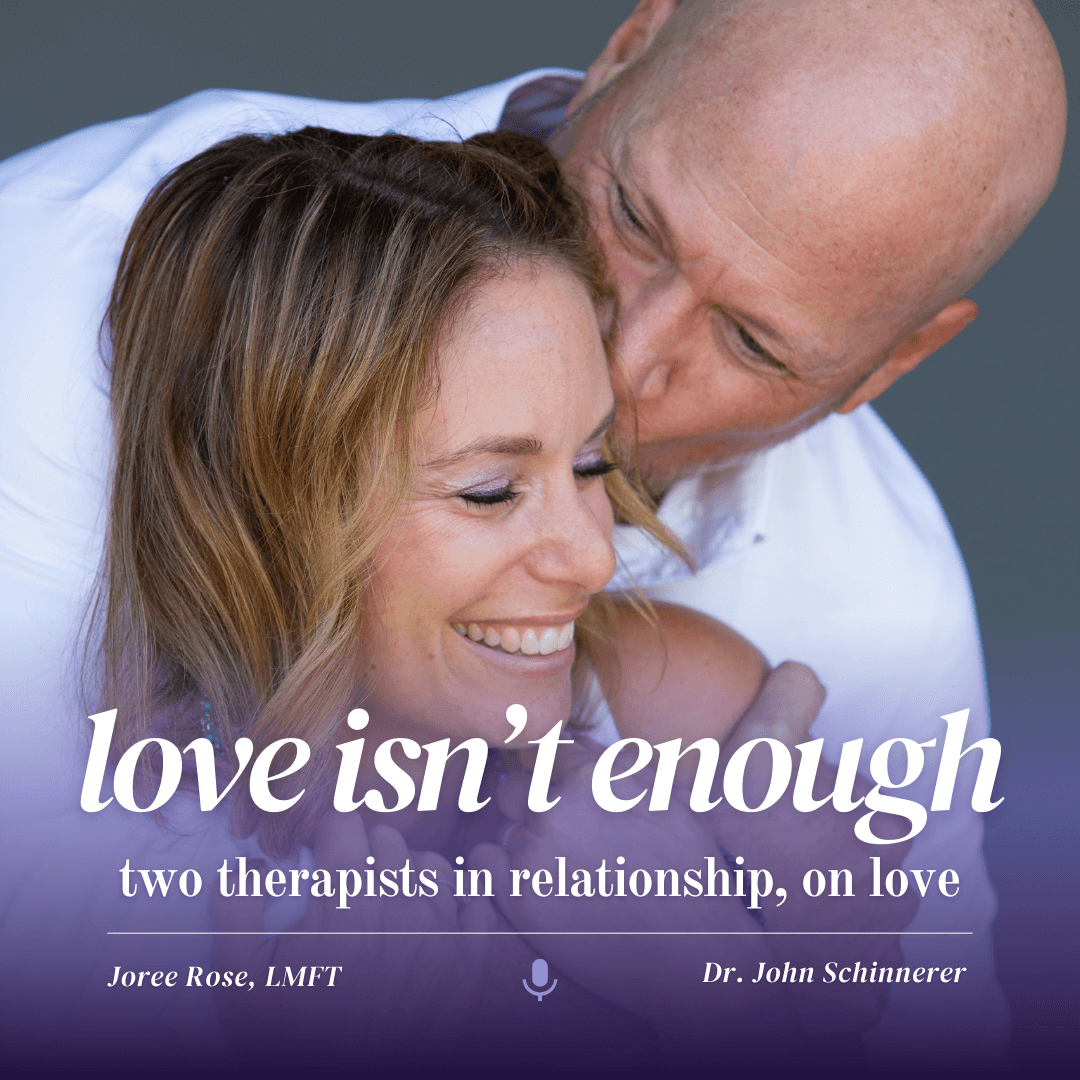
In this episode of Love Isn’t Enough, Dr. John Schinnerer and Joree Rose, LMFT take a deep dive into the first two (of four) of the biggest relationship killers: defensiveness and criticism. These behaviors, identified by Dr. John Gottman as part of the “Four Horsemen of the Apocalypse,” are major predictors of relationship dissatisfaction and conflict.
But the good news? With awareness and intentionality, couples can break these toxic patterns and create healthier, more connected communication.
We explore:
• What the Four Horsemen are and why they matter in relationships.
• How criticism differs from constructive feedback—and why it often leads to defensiveness.
• The underlying fears and wounds that drive defensiveness (and how to shift out of it).
• Practical tools to replace criticism with compassionate communication.
• How to create emotional safety so both partners feel heard and valued.
If you and your partner ever find yourselves stuck in a cycle of blame, frustration, or misunderstanding, this episode is packed with insights to help you break free and build a stronger, safer, more loving relationship.
Connect with Joree & Dr. John and Love Isn’t Enough:
• Website: www.loveisntenough.net
• Instagram: @loveisntenough33
• Subscribe to their podcast: Love Isn’t Enough
• Join our relationship Master Class series: https://loveisntenough.net/masterclass/
Connect with Dr. John Schinnerer:
• Websites: www.guidetoself.com | www.TheEvolvedCaveman.com
• Instagram: @theevolvedcaveman
• Subscribe to his podcast: The Evolved Caveman
Connect with Joree Rose, LMFT:
• Website: www.joreerose.com
• Instagram: @joreerose
• Subscribe to her podcast: Journey Forward with Joree Rose
• Join the Podcast Membership: https://joreerose.com/journeyforwardpodcast/
The 4 Horsemen of the Apocalypse: How Criticism and Defensiveness Damage Your Relationship – Transcript
Joree Rose, LMFT: Hey, welcome back to Love Isn’t Enough. You’re here with Joree and John this should be a fun conversation. Hi.
Dr. John Schinnerer, Marriage Therapist: Are you ready for the hook?
Joree Rose, Marriage Therapy for Women: Give them the hook, John. Here comes the hook. That sounds like too much of a hook when you tell them it’s a hook.
Dr. John Schinnerer, Relationship Coach for Men: It’s a preparatory hook. Anyway, here’s the hook.
Dr. John Schinnerer, Relationship Coach for Men: The hook is if [00:01:00] you knew of some things that you may or may not be doing in your relationship or in your marriage that we could use to predict divorce with over 90% accuracy, would you be interested in hearing what those are?
Joree Rose, LMFT: Yes, Says the listener.
Dr. John Schinnerer, Marriage Therapist: Yeah. I, think it’s, amazing because in the social sciences, there’s nothing and, I think the actual stat is 92% accuracy within five minutes of watching a video of you arguing about something, John Gottman can predict with 92% accuracy, whether you will be divorced in five years and nothing in the social sciences approaches that kind of accuracy.
Dr. John Schinnerer, Relationship Coach for Men: Very
Joree Rose, Marriage Therapy for Women: little. It’s pretty amazing. And I just have to say, shout out to the Gottman’s. I remember being in graduate school and even actually undergrad and learning about the Gottman’s work and being so Absolutely. I. You might need those to read. See? Yeah. I just grabbed his glasses out of his hand so he doesn’t play with [00:02:00] them and make sounds, but he might actually need them to read his notes.
Dr. John Schinnerer, Relationship Coach for Men, Top 10 Men’s Counselor: Sorry. Annoying is in the eyes of the Be Boulders
Joree Rose, LMFT: backend going around here. As I was saying, the Gottman’s they’ve been scientifically studying relationships, which almost for 50 years. For 50 years, which almost seems. An oxymoron, like how do you scientifically study what may not feel measurable, such as relationship patterns?
Dr. John Schinnerer, Relationship Coach for Men: Yeah. And, they’ve gone about it in a, very unique way. They had a house that they used to host couples in and they would hook ’em up and, look at physiological responses in terms of blood pressure and skin conductance and heart rate and cortisol. And, then they would go back and.
Dr. John Schinnerer, Marriage Therapist: Deconstruct at what was going on moment by moment along with video.
Joree Rose, LMFT: I used to ha, I had told myself, had I not been in the relationship I was when I was in college and was looking into graduate [00:03:00] school, I would have loved to go to Seattle and work at the Love Lab is what it was called. It was like the original, like the OG reality show.
Joree Rose, Marriage Therapy for Women: Really? Yeah. And they would record couples 24 hours a day for a couple of days at a time, and this is what they were able to track is one of their best ongoing, consistent stats and predictors of what, not just the predictor of divorce, but I wanna look at it from the other lens of. Let’s not do these things and be a predictor of happiness and connection.
Dr. John Schinnerer, Relationship Coach for Men: I think that’s one of the brilliant things about them, and to me they are, John and Julie Gottman are the preeminent researchers on relationships in the world, period. Far none. And I think one of the things that’s beautiful about them is I, would say they spent, I don’t know, 30 years looking at what makes us break up and divorce, and then they spent the last.
Dr. John Schinnerer, Marriage Therapist: 10, 15, 20 years looking at what makes a healthy relationship. And I, think we need both sides of the coin because both are critically important.
Dr. John Schinnerer, Relationship Coach for Men: But to get, to move on to the topic of the [00:04:00] day, we’re gonna do a two-part episode, two-part series on the four horsemen of the apocalypse, as the gottman’s have named them.
Dr. John Schinnerer, Relationship Coach for Men: And, these four are criticism, contempt, defensiveness. Stonewalling,
Joree Rose, Marriage Counseling for Women: and these are the four things that they have determined, as you said in their research, that when these four things are present, it is a predictor of divorce with that high level 90%. Accuracy. Accuracy, yeah. So the invitation here as you’re listening is as always, because some of the times the things that we talk about might induce some shame or self-judgment, or your inner critic might get louder, be like, ah,
Dr. John Schinnerer, Relationship Coach for Men: shit.
Dr. John Schinnerer, Marriage Therapist: Yeah. For God’s sake, don’t get defensive.
Joree Rose, LMFT: About us talking about defensiveness, uhhuh, uhhuh.
Joree Rose, LMFT: But this is, part of the work is how can we engage in new patterns while managing our physiology. Yeah. Because what I was starting to allude to is even talking about this stuff is gonna [00:05:00] increase some sort of physiological response.
Joree Rose, Marriage Counseling for Women: If you notice, these are patterns you and your partner engage in. Yeah. And that physiological response might look like. A pit in your stomach, heart rate, increase, tension, oh, and tightness in your shoulders, constriction of your throat, tightness in the chest. These are indicators of a stress response
Dr. John Schinnerer, Marriage Therapist for Men: and we’re also not very good at spotting them, right?
Dr. John Schinnerer, Relationship Coach for Men: For many of us there’s this huge disconnect between what we believe is going on in our mind and what’s going on in our body. And in fact, the Gottman’s use a pulse oximeter and, in fact, a lot of Gottman therapy will have a pulse oximeter on the fingertips of both. Partners so that they can measure what the pulse is doing.
Dr. John Schinnerer, Relationship Coach for Men: And if the pulse goes over a hundred beats per minute, they’ll stop what’s going on and say, we gotta take a 20 minute time out. Each of you go to your corner and read a magazine and don’t think about what we were just talking about.
Joree Rose, Marriage Therapist for Women: And I agree to stay on this second, on this topic for a second because we’ve talked about this before and I don’t recall if it was specifically, oh no, we did.
Joree Rose, LMFT: Our last episode was about [00:06:00] sex. ’cause I also know we talk about this on our masterclass series. But this idea of just how disconnected we are from our own physiology when we talk about it in regards to sex, there’s this. Very easy familiar pattern not easy, but familiar pattern women get into in regards of being disconnected from their body and their arousal state.
Joree Rose, Marriage Therapist for Women: And I think we are easily disconnected from our body in our emotional state that tightness, that tension, we’re not translating that into saying. I need a pause and it’s not just women. I need a break. That’s what I’m saying. I would say it’s,
Dr. John Schinnerer, Marriage Therapist for Men, Top 10 Counselor For Men: men also because we learn at a young age how to suppress pain, but also how to suppress emotion.
Joree Rose, LMFT: I would drawing the comparison, disconnect ourselves from the bottom, from women and sex was the bridge, but we all cut off. From that and. One of the best ways to learn these tools we’re about to teach is to notice the barriers to being able to access them. Yeah. And those barriers are gonna show up in our [00:07:00] physiology.
Joree Rose, Marriage Therapist for Women: And it’s easy to start there first, because you can name that with observation. Oh, I’m noticing my heart increasing. I’m noticing my shoulders just got a little bit tense. I am noticing a pit in my stomach. And the idea here is to slow down our reactivity to that and either a. Assume, oh shit, what’s the problem here?
Joree Rose, Marriage Counselor for Women: But really just to notice that as an indicator of something in me is activated, what can I do to deactivate it? Because if I’m activated, I’m not able to access my tools and resources
Dr. John Schinnerer, Relationship Coach for Men: And I think this also speaks to the importance of practicing tools, like deep breathing, mindfulness, meditation, when things are good, when things are calm, so that we can have a better chance of returning to that relaxed state.
Dr. John Schinnerer, Relationship Coach for Men: When things are tense,
Joree Rose, LMFT: We gotta build a pathway outside of the emergency.
Joree Rose, Marriage Counselor for Women: And if you and your partner are having an argument, I’m gonna say that in your body, that feels like an emergency. Yeah. You’re in the middle of fight, flight, freeze when you’re getting triggered and [00:08:00] you’re arguing, and the further you argue the more disconnected from your own body and likely from what you’re saying and from your partner, you’re gonna end up being.
Dr. John Schinnerer, Relationship Coach for Men: Yeah. So let’s go over the four real quickly, just briefly. Yep. And then we’ll focus on two in this episode. Yep. Sounds
Joree Rose, LMFT: great.
Dr. John Schinnerer, Marriage Therapist for Men: Do you wanna start with criticism?
Joree Rose, LMFT: Sure. Gosh, what there’s so much to say about criticism when couples begin to name their partner’s behaviors or ways of in engaging or communicating.
Joree Rose, Marriage Counselor for Women: Through a lens of criticism, it is never, ever gonna lead to connection.
Dr. John Schinnerer, Marriage Therapist for Men: Yeah. And, criticism looks like attacking the whole person versus speaking to their behavior, which might be annoying in the minute. In other words, your partner doesn’t do the dirty dishes like he said he was going to. She comes home, she’s oh my God, you are so lazy.
Dr. John Schinnerer, Relationship Coach for Men: You never do the dishes. That [00:09:00] sentence of you are so lazy is a criticism. It’s describing him as a complete whole.
Joree Rose, Relationship Counselor for Women: It’s a character,
Dr. John Schinnerer, Relationship Coach for Men: maybe an asshole, I dunno, but it’s a whole,
Joree Rose, LMFT: it’s. It’s a character attack, attack a whole
Dr. John Schinnerer, Relationship Coach for Men: with a w, not without
Joree Rose, LMFT: we got it. John King context flus.
Dr. John Schinnerer, Marriage Counselor for Men: Yeah.
Joree Rose, Relationship Counselor for Women: It’s a character attack.
Dr. John Schinnerer, Relationship Coach for Men: Yeah.
Joree Rose, LMFT: It’s not the opposite of criticism would be to name exactly what I see the dishes weren’t done. I’m disappointed that wasn’t followed through on I actually said that a lot more, but with a lot more awareness. ’cause there was no U statement in there. ’cause the U is the, one of the things that causes defensiveness, which we’ll get to as well, but to, be mindful of in criticism.
Joree Rose, LMFT: What are you. Overarching into character.
Joree Rose, Relationship Counselor for Women: Versus specific behaviors or things that are
Dr. John Schinnerer, Marriage Counselor for Men: in the moment. Yeah. It’s an attack on character.
Dr. John Schinnerer, Marriage Counselor for Men: And so the next one is contempt. And we’re not doing these in any particular order other than alphabetical. So contempt, I think of contempt as, contempt would’ve
Joree Rose, Relationship Therapist for Women: [00:10:00] come first.
Dr. John Schinnerer, Relationship Coach for Men: Oh, you’re right, then forget the alphabetical order. We’re not doing this, we’re just doing this willy-nilly. So contempt I think of is anger with judgment. It often looks like sarcasm, eye rolling, disdain it in a relationship. It’s where one partner is putting themselves on some level above the other partner as if they know better or as if they are better.
Dr. John Schinnerer, Marriage Counselor for Men: And this is the most dangerous of the four.
Joree Rose, Relationship Therapist for Women: I think they’re all pretty dangerous in their own right. They all I yeah, this,
Joree Rose, LMFT: they all are really painful and they all have a lot of potential to create a lot of damage and harm in the relationship.
Dr. John Schinnerer, Marriage Counselor for Men: This is the one that Gottman focuses on when he is looking at videos.
Dr. John Schinnerer, Relationship Coach for Men: Okay. Of, of couples. And if he sees it within five minutes, I or less in a video of the couple arguing he knows with 92% accuracy. Okay, they’re headed for divorce.
Joree Rose, Relationship Therapist for Women: Yeah. It’s,
Dr. John Schinnerer, Marriage Counselor for Men, Top 10 Therpaist For Men: that’s insane. It’s thin slicing.
Joree Rose, Relationship Therapy for Women: It is at its finest. And I, think of contempt as a place of righteousness. And you [00:11:00] said that I’m better than you and I know better.
Joree Rose, LMFT: I am better, I do better. And that is really damaging to safety.
Dr. John Schinnerer, Marriage Counselor for Men: Yeah. The third one, if we’re not going alphabetically, is Go ahead.
Joree Rose, LMFT: I was gonna say, because I you described It’s my turn. Go
Dr. John Schinnerer, Relationship Coach for Men: ahead. I was just gonna say it then you can explain it.
Joree Rose, Relationship Therapy for Women: D
Joree Rose, Relationship Therapy Danville CA: efensiveness.
Dr. John Schinnerer, Relationship Counselor for Men: Yes.
Joree Rose, LMFT: That’s how I wanna talk about. Okay.
Dr. John Schinnerer, Relationship Coach for Men: You say it and explain it.
Joree Rose, LMFT: Defensiveness is not being able to listen openly to what your partner has to say. And so therefore, the opposite of defensiveness would be open-hearted. Open-minded, open listening.
Dr. John Schinnerer, Relationship Coach for Men: Yeah and I, think I used to think of defensiveness. As my partner comes at me with a criticism or perceived criticism, and I respond.
Dr. John Schinnerer, Relationship Counselor for Men: With some degree of anger defending what I was thinking or doing or my intention. And one of the things I realized in this relationship with you is defensiveness doesn’t have to have any anger at all to it. I can [00:12:00] still be defensive if I just calmly respond and explain, this is what I was thinking, this is what I was trying to do.
Dr. John Schinnerer, Relationship Coach for Men: These were my intentions. Because even when I do that, I’m not focused on hearing and validating her emotion.
Joree Rose, Relationship Therapy Danville CA: And
Dr. John Schinnerer, Relationship Coach for Men: that’s the problem.
Joree Rose, Relationship Therapist Danville CA: And, we’re gonna go into deeper all this and give actually a lot more examples and explain how to get out of the patterns and what to do there. And I think this is one of the most easily, this is just on my observational analysis of my own client base in witnessing couples in session.
Joree Rose, LMFT: I think defensiveness is one of the most common and repeated over and over because it seems like if contempt is one of the biggest, I feel like defensiveness is one of the smallest in its. It happens so easily.
Dr. John Schinnerer, Relationship Counselor for Men: I think it’s innate too, like we’re born with it at some level. And it’s a natural instinct to want to share what were you thinking or doing?
Dr. John Schinnerer, Relationship Therapist for Men: Because a lot of times our intentions are good, but they can still hurt our partner.
Joree Rose, LMFT: And so if if contempt is looking [00:13:00] from a, place of higher and attacking or even criticism or attacking character, if I’m defending, my character.
Dr. John Schinnerer, Relationship Coach for Men: Okay,
Joree Rose, Relationship Therapist Danville CA: so the last one
Dr. John Schinnerer, Relationship Coach for Men: a
Dr. John Schinnerer, Relationship Coach for Men: nd the last one is a Hall of fame one for me personally, it’s stonewalling,
Joree Rose, Relationship Counselor Danville CA: not in a good hall of fame way.
Dr. John Schinnerer, Relationship Therapist for Men: No, it was not a good award. The worst hall of fame the negative hall of fame. But basically what it is it’s shutting down and removing yourself from the conversation, whether verbally, physically, or emotionally. And I used to have a great rationalization for it. I used to think I’m getting flooded, I’m getting angry, I’m getting triggered.
Dr. John Schinnerer, Relationship Coach for Men: I don’t wanna say anything in anger that’s gonna hurt jury, which is completely defensible and a great rationalization in my mind. The problem is, it’s still in the moment, is stonewalling, right? And I knew stonewalling was really problematic, and as soon as I had that realization like, oh crap, I’m stonewalling.
Dr. John Schinnerer, Relationship Coach for Men: That was my motivation to start to change it. [00:14:00]
Joree Rose, LMFT: What’s interesting is I was in a tough spot there because even if I were to name as gently as I could, Hey love this is stonewalling here. I don’t think I ever said it to you that clearly. But I, it could have been easy for you to respond offensively as having
Dr. John Schinnerer, Relationship Coach for Men: it
Joree Rose, Relationship Counselor Danville CA: as a criticism.
Joree Rose, LMFT: Yeah. Potentially. Even seeing it as contemptive, I’m not stonewalling. I don’t do that to you, that’s a contempt false response right there. And to get I’m better than that.
Dr. John Schinnerer, Relationship Therapist for Men: I think it’s a defensive response.
Joree Rose, Relationship Counselor San Ramon CA: I could see how I’m, if I’m thinking I’m
Dr. John Schinnerer, Relationship Coach for Men: better than you.
Joree Rose, LMFT: That’s what I started to say, that I’m better than you because I don’t do that to you. That would be some contempt, thrown that direction. Yeah. It’s a really painful one to be on the receiving end of.
Dr. John Schinnerer, Relationship Coach for Men: Yeah. And it’s, none of these feel good, but it’s, unilaterally shutting down communication, connection, and the conversation.
Joree Rose, LMFT: Yeah. So let’s dive in a little bit more. Okay. We’re, gonna do two of these.
Dr. John Schinnerer, Relationship Coach for Men: Criticism and defensiveness,
Joree Rose, Relationship Counselor San Ramon CA: right? [00:15:00] Which one do you wanna do first?
Dr. John Schinnerer, Relationship Therapist for Men: Let’s start with criticism.
Joree Rose, Marriage Counselor San Ramon CA: Alphabetical.
Dr. John Schinnerer, Relationship Coach for Men: Let’s, yes. Let’s back to the alphabetical. We’ll get it right. Yeah. Dammit. Let’s start with the dishwasher.
Joree Rose, LMFT: We have a couple examples ’cause that’s
Dr. John Schinnerer, Relationship Coach for Men: a
Dr. John Schinnerer, Relationship Therapist for Men: classic, this is a classic for most couples.
Dr. John Schinnerer, Marriage Therapy for Men: And, a lot of times the stuff we argue about is stupid stuff, but it’s stuff that we just get in the groundhog day of repeating these same arguments over and over. And when Joy and I are working with a couple, we don’t focus on the details. We don’t care a whole lot about the details.
Dr. John Schinnerer, Relationship Coach for Men: We care about the underlying patterns so we can stop the pattern of repetitive arguments.
Joree Rose, Marriage Counselor San Ramon CA: And sometimes we need to see those details in action a couple of times to see the full patterns, but. This is an invitation to the listener if you are over focusing on the details of, he said, she said, you’re missing the point of how you can actually grow out of this stuff.
Joree Rose, Marriage Counselor Dublin CA: Right off the bat looking at criticism. So back at the dishwasher example, you wanna say your side of the story on this one.
Dr. John Schinnerer, Relationship Coach for Men: Sure. When we started dating I [00:16:00] Joy’s a great cook and I’m very appreciative of the cooking that she does and I felt my. Contribution would be cleaning up after she cooked, which I was more than happy to do, except that there was a couple things.
Dr. John Schinnerer, Relationship Coach for Men: One is I would put the dishes in the dishwasher wrong apparently. And I, had stacked dishwashers my whole life with some success and she would often come behind me and either comment.
Joree Rose, LMFT: Gently. Yeah,
Dr. John Schinnerer, Marriage Therapy for Men: definitely gently that this might be different or maybe you could put this here, or she would come around after me and reorganize the whole thing.
Dr. John Schinnerer, Relationship Coach for Men: To which I, it was a little bit hurtful because it’s look if, I’m gonna put the dirty dishes in the dishwasher and you’re gonna come behind me and reorganize everything, why don’t you just do the whole thing? Like, why are we doing double the work?
Joree Rose, Marriage Counselor Dublin CA: I was very careful to not want you to feel like I was [00:17:00] criticizing the way you did that. And I have since learned more and more about myself, and I realized how that was coming across as a criticism. And sometimes there’s challenges in the way that we do things differently. And so part of it is the awareness of how it’s communicated.
Joree Rose, LMFT: Part of it is outside of that moment explaining perhaps what was coming up for each of us. Because we often talk about, if you try to explain in the moment where each of us were at, it’s gonna sound defensive and it’s not gonna lead to more empathic, open-hearted listening
Dr. John Schinnerer, Relationship Coach for Men: Yeah.
Joree Rose, Marriage Counselor Dublin CA: To lead to growth and connection for the next time that occurs.
Joree Rose, Marriage Counselor Pleasanton CA: But it’s one of those things that I think criticism can really easily show up just because people do things differently.
Joree Rose, LMFT: And another example we hear a lot from clients and we even experience this one, is the perception of criticism when it’s not.
Dr. John Schinnerer, Marriage Therapy for Men: Yeah.
Joree Rose, Marriage Counselor Pleasanton CA: And the example [00:18:00] is one person’s downstairs, the other one comes down in the morning, or maybe it’s the end of the workday, and one says to the other, has the dog been fed?
Joree Rose, LMFT: The implication, many people receive it as is a criticism that the one who’s downstairs, for example, didn’t feed the dog. And it’s a judgment and a criticism. That’s how it gets perceived. Even if that’s not the intent.
Dr. John Schinnerer, Relationship Coach for Men: And I would argue though, that has the dog been fed isn’t a criticism in and of itself’s.
Dr. John Schinnerer, Relationship Coach for Men: It’s you’re saying it’s a perceived criticism.
Joree Rose, LMFT: so this is where criticism gets really tricky, Uhhuh, because even when the question has the dog been fed or. Anything along the lines of letting, wanting know the status of something.
Joree Rose, Marriage Counselor Pleasanton CA: For many people the what they hear is, did you feed the dog?
Dr. John Schinnerer, Marriage Therapy for Men: Or You’re a lousy dog owner?
Joree Rose, Marriage Therapist Pleasanton CA: And when John used to ask me, did the dog get fed, my response was like, of course the dog got fed. What do you think? I’m not taking care of my dog. And I thought it was a [00:19:00] criticism, and I’ve heard this from clients too.
Joree Rose, LMFT: And it’s. It’s really hard because there’s something in where criticisms show up that get lost in translation sometimes.
Joree Rose, Marriage Therapist Pleasanton CA: ’cause that question has a dog been fed is a neutral question.
Dr. John Schinnerer, Relationship Coach for Men, Top 10 Executive Coach For Men: Yeah. And it wasn’t intended as a criticism, it was to make sure the dog got fed. I with an household of three or four people right around, I just wanted to make sure the dog got his meal because he can’t speak.
Joree Rose, Marriage Therapist Fremont CA: He can speak.
Dr. John Schinnerer, Relationship Coach for Men: I haven’t been fed.
Joree Rose, LMFT: He won’t show us.
Dr. John Schinnerer, Marriage Therapy for Men: He did tell me You’re an asshole though recently. Talking to me.
Joree Rose, LMFT: Oh, that you were the asshole.
Dr. John Schinnerer, Marriage Counseling for Men: Yeah, I’m sure. Yeah. That was surprising.
Joree Rose, Marriage Therapist Fremont CA: You weren’t giving him enough of your peanut butter toast in the morning.
Joree Rose, Marriage Counselor Fremont CA: I’m glad you say he was telling you were asshole, that he wasn’t telling you I was the asshole. Yeah. I was confused on that. I’m like
Dr. John Schinnerer, Relationship Coach for Men: I thought should, that’s a criticism right there. Should, I should really clarify that really quick.
Joree Rose, LMFT: So part of the work around criticism is to check your own [00:20:00] interpretation.
Joree Rose, LMFT: Because. You could say something very clearly to me, but if it’s a sensitive spot for me, or if I have a narrative attached to not being good enough, or not being enough, or not doing enough, I might interpret some of these neutral questions as a criticism.
Dr. John Schinnerer, Relationship Coach for Men: Yeah. And I, I think that one of the great ways to deal with this is to have conversations about these sore spots after they arise, maybe a day or two or three later, and have an honest.
Dr. John Schinnerer, Marriage Counseling for Men: Curious and nonjudgmental conversation about what’s actually going on here and why did you get triggered? What happened here that set you off? What was your interpretation? What did you think I was saying, because we wanna iron these disconnects out because it’s really, it’s over nothing.
Joree Rose, Marriage Counselor Fremont CA: And I think even the two examples we just gave of me redoing the dishwasher. That was not a verbal criticism.
Joree Rose, Marriage Therapy Pleasanton CA: And it was interpreted more of a criticism.
Joree Rose, LMFT: And I think we should give some [00:21:00] examples of some real criticisms,
Dr. John Schinnerer, Relationship Coach for Men: criticism on the other side,
Joree Rose, LMFT: can we finish the dishwasher thing real quick?
Dr. John Schinnerer, Marriage Counseling for Men: Sure. Joy likes it when I bring it full circle because she feels so vindicated.
Joree Rose, Marriage Therapy Pleasanton CA: I do.
Dr. John Schinnerer, Marriage Counselilng for Men: And the way the day she felt vindicated is. When I was doing the dishes and the dishwasher was pretty full, 99% full. And, so we had a dinner full of dishes and I put as many dishes as I could in the dishwasher and I said ready to,
Joree Rose, Marriage Therapy Walnut Creek CA: we’ll have to leave some of the sink.
Dr. John Schinnerer, Relationship Coach for Men: We’ll have to leave some of the sink. So she comes by a little bit later and she opens it up and she just thinks I can fit more dishes in here.
Joree Rose, LMFT: I start rearranging
Dr. John Schinnerer, Relationship Coach for Men: and she started rearranging and I was just standing there watching her kind of curious, like I. How good is she? And honestly, to my surprise, she was damn good.
Dr. John Schinnerer, Marriage Counselilng for Men: And she sees it as a game. She sees the like Tetris, right? It was totally, it’s a puzzle game to her. And she’s got good visuals, spatial skills, and she put, I don’t know, 30% more dishes in there. I was [00:22:00] kinda like, wow, you really want better with the dishwasher than I am.
Dr. John Schinnerer, Relationship Coach for Men:
Joree Rose, LMFT: the only vindication I needed. And now. I rarely go in after you. I think I just needed that point proved for me. Yeah, it makes sense. I just was I’m just really good
Dr. John Schinnerer, Relationship Coach for Men: at, I won’t give you that. You’re better at it.
Joree Rose, Marriage Therapy Walnut Creek CA: I’m really good at that.
Dr. John Schinnerer, Relationship Therapy Danville CA: I have no ego around it.
Joree Rose, Marriage Counseling Walnut Creek CA: You don’t Now, you felt criticized before though.
Joree Rose, LMFT: If I, because that was what you example where
Dr. John Schinnerer, Relationship Coach for Men: you brought up, it didn’t make sense to me. If you’re gonna come back, if you’re gonna come in after me and redo the dishes. It just seems like that’s a duplication of effort.
Joree Rose, LMFT: So let’s talk about some real criticisms.
Dr. John Schinnerer, Relationship Coach for Men: I think anything that attacks characters, you’re such an idiot.
Dr. John Schinnerer, Relationship Therapy Danville CA, Top 10 Executive Coach: You’re so lazy, you never do anything around the house, anything where you’re attacking and, it’s an insult really attacking someone’s whole person. I. Is a criticism.
Joree Rose, Marriage Counseling Walnut Creek CA: I think not
Dr. John Schinnerer, Relationship Counseling Danville CA: re not perceived. It’s a real criticism.
Joree Rose, Marriage Counselor Walnut Creek CA: And I think one of the key words you said in some of those examples [00:23:00] is an important reminder to show you when you’re doing this are words like always, never.
Joree Rose, LMFT: Those all or nothing statements. That’s just not true.
Dr. John Schinnerer, Relationship Coach for Men: It’s never true. It’s never
Joree Rose, LMFT: true.
Joree Rose, Marriage Counselor Walnut Creek CA: And so we need to be really mindful, and this is something that I work really hard at for myself and I try to teach. My clients and our clients. Just the power of language.
Dr. John Schinnerer, Relationship Coach for Men: Yeah.
Joree Rose, Marriage Theraist Walnut Creek CA: That it seems so overly simplified, but what we say matters.
Joree Rose, LMFT: How we say it matters. I always say there’s four things that need to be in alignment for language to be, or communication to be received and the intention that it was given. So it’s not just the words. But the tone, the body language and the volume all have to be in alignment. You could have the right words, but a tone that sounds critical, it’s gonna throw it entirely off
Dr. John Schinnerer, Relationship Counseling Danville CA: and the tone might be actual or perceived.
Joree Rose, LMFT: Correct.
Dr. John Schinnerer, Marriage Counseling Danville CA: And we’ve seen that before too. ’cause some people have a tone to their voice and have no awareness, and that’s just their regular, everyday voice. [00:24:00] So some people we know have an outdoor voice as an indoor voice. For as far as volume goes,
Joree Rose, Marriage Theraist Walnut Creek CA: I’m curious. Do you have real examples of when I’ve actually criticized you, not perceived like with redoing the dishwasher?
Dr. John Schinnerer, Marriage Counseling Danville CA: I don’t think you’ve, you don’t criticize? I
Joree Rose, Marriage Therapist Walnut Creek CA: don’t criticize. I don’t think that’s one that I personally connect around. I don’t think I’m a critical person.
Dr. John Schinnerer, Relationship Coach for Men: I think there may have been times when we were playing around with anger and getting angry with each other after the breakup, where once or twice there might’ve been something in there.
Dr. John Schinnerer, Marriage Counseling Danville CA: But that was just more of an insult, not a criticism.
Joree Rose, LMFT: True
Dr. John Schinnerer, Relationship Coach for Men: and I that went both ways. That wasn’t just you.
Joree Rose, Marriage Therapist Walnut Creek CA: Yeah. I don’t think criticism has been much a part of our relationship dynamics at all.
Dr. John Schinnerer, Relationship Coach for Men: I’ve always been aware of it, and so I’ve always tried not to do it
Joree Rose, Marriage Therapy Walnut Creek CA: right.
Joree Rose, LMFT: And I think it’s worth saying again, and I know I say it often, but in order to build the most secure relationship possible, a really great starting point is to know your partner’s deepest wounds and insecurities. What are their sore spots? [00:25:00] Where do they get sensitive? And do your very best not to activate them.
Dr. John Schinnerer, Marriage Counseling Danville CA: Yeah. The goal is to create a safe and secure relationship for both of you. That’s the goal.
Joree Rose, LMFT: And so how we communicate to each other, even when angry is gonna help with that.
Dr. John Schinnerer, Marriage Counseling San Ramon CA: Yeah. S
Dr. John Schinnerer, Relationship Coach for Men: o are you ready to turn to defensiveness?
Joree Rose, Marriage Therapy Walnut Creek CA: Yeah. I wanna talk about how I was defensive around not being defensive.
Dr. John Schinnerer, Relationship Coach for Men: Okay.
Joree Rose, Marriage Counseling Walnut Creek CA: I think I had some self-righteousness that I am not a defensive person and I am humbly saying now, ah, shit, God damnit I am. And that’s really hard. I was defensive the other day to you and I hated myself for how it felt. Not hate is really strong. I felt shame afterwards around not being a better open-hearted listener because I was quick to share.
Joree Rose, LMFT: My actions or my, [00:26:00] my, what’s not the word, but for the actions of what I was defending, my intentions.
Joree Rose, Marriage Counseling Walnut Creek CA: And I was not wrong in what I was saying. However, the timing at which I named it was not appropriate to what you were sharing.
Dr. John Schinnerer, Marriage Counseling San Ramon CA: You weren’t wrong because those were your intentions.
Dr. John Schinnerer, Marriage Counseling Walnut Creek CA: And your actions were defensible. But it’s not about that in the moment. But it wasn’t about
Joree Rose, LMFT: it. No. It was about, am I here to openly listen, openly hear what you’re saying, and can I listen to you in a way that has nothing to do with what was underneath it for me?
Dr. John Schinnerer, Relationship Coach for Men: I think this is a really, critical point.
Dr. John Schinnerer, Relationship Coach for Men, Awarded Best Executive Coach Of The Year: If you’re reading the transcript, get out your highlighter. If you’re taking notes, get out your pen and paper, but I totally lost it. That’s a cliffhanger, huh?
Joree Rose, LMFT: Seriously
Dr. John Schinnerer, Marriage Counseling Walnut Creek CA: Defensiveness.
Joree Rose, Marriage Counseling Walnut Creek CA: It wasn’t a, I wasn’t wrong in my intentions.
Dr. John Schinnerer, Marriage Therapist Walnut Creek CA: Yeah. O
Dr. John Schinnerer, Relationship Coach for Men: h, so it’s, about [00:27:00] hearing your partner’s emotion beneath their words. Validating how they feel. That’s the first step. Always. I have not seen a situation where that’s not a good first step. Hey honey, I see where you’re really upset about that.
Dr. John Schinnerer, Relationship Coach for Men: Wow. I can see where that really hurt. I get that you were let down. I get that you’re disappointed. I feel you
Joree Rose, Marriage Counseling Concord CA: are. Are you available to be vulnerable right now and we can share what it was? Oh,
Dr. John Schinnerer, Marriage Therapist Walnut Creek CA: and again. Sure.
Joree Rose, LMFT: Okay. So you wanna set the stage?
Dr. John Schinnerer, Marriage Therapist Lafayette CA: I don’t, you’ll have to refresh my memory.
Joree Rose, LMFT: Okay. S
Joree Rose, Marriage Counseling Concord CA: o it was a Wednesday morning about 7:00 AM and that’s actually true.
Joree Rose, Marriage Therapy Concord CA: See, this is where sometimes my good memory comes into a hard, oh, I love when my German fiance uses Yiddish. Okay. So literally it was like a Wednesday morning. And it was really early. It was like 7:00 AM and you were in a grouchy mood. [00:28:00] And I had come downstairs to say good morning, and I was met to a slightly cold reception and I went back upstairs and I was finishing my morning routine before we went to the gym.
Joree Rose, LMFT: Okay. Now we’ve got the stage set. You’re going through your vitamin drawer, getting your vitamins of the morning, and I asked what was going on ’cause I could tell you weren’t in a great mood.
Joree Rose, LMFT: That’s always a, an interesting question for me because I used to always really, wanna know what was going on, and I’ve gotten better at not being so needy to be nosy because it’s not nosy.
Joree Rose, Marriage Therapy Concord CA: But I, used to feel like I had to know mostly because underneath that I was afraid it was about me.
Joree Rose, Marriage Therapist Concord CA: I used to pry a lot more about what you were feeling, thinking, or where you were at emotionally, because I, did not feel secure in our attachment back then. And I had fears that it was about me, so I used to inquire More.
Joree Rose, LMFT: and you shared, you were grumpy, so do you wanna share what you shared with me? I don’t remember. Oh. So
Dr. John Schinnerer, Relationship Coach for Men: I’m remembering as you’re [00:29:00] sharing.
Joree Rose, LMFT: Okay. John moved in here about into my house about five months ago, and the room that is his office was previously like a TV room playroom for the kids.
Joree Rose, Marriage Therapist Concord CA: And there’s a big couch in there and there’s still furniture in there that we need to remove. And his desk is a small, little tiny desk my daughter used during Covid. So there’s not much space for his stuff. And I think. Because of his eye issues. He’s had he moved in September, lost his vision, end of November.
Joree Rose, Marriage Counselor Concord CA: So we have been going on four months
Dr. John Schinnerer, Relationship Coach for Men: and been blind for four months since in one eye
Joree Rose, LMFT: we’ve been going on four months of being halted in progressing, making our home, given to the eye issues. But something about there was mounting frustration, maybe some resentment around not having your space in the office
Dr. John Schinnerer, Marriage Therapist Lafayette CA: as you needed.
Dr. John Schinnerer, Relationship Coach for Men: I think I woke up that morning thinking. That I was frustrated because I feel like [00:30:00] the progress in my office has been halted. Not through your fault or mine, but through circumstance. I think that I felt like I was a little bit less than because I had no space in the house to call my own again, not through Not your fault.
Dr. John Schinnerer, Relationship Coach for Men: Just because of circumstance and I was a little bit grieving or sad over. Having just given up all my stuff pretty much, or a lot of my stuff in order to move in. And partly that was just fueled by the fact that I woke up in a bad mood. I was just I hadn’t slept great and I was just a little bit grouchy and my mind ran away with me.
Joree Rose, LMFT: And so when, he shared this with me, I did not respond well. I went immediately to defensiveness. And I think underneath my defensiveness, I was feeling sad that you were sad and frustrated, and I could have just stopped there and said that.
Joree Rose, Marriage Counselor Concord CA: And that would’ve [00:31:00] honored and met you where you were at.
Joree Rose, Marriage Counselor Alamo CA: It would’ve validated your emotion and your experience and your mood. And that validation could have been a simple sentence and then a hug and a kiss. And that could have been it. But I got defensive because what I interpreted was. You have not made space for me in this house. You have not welcomed me into your home.
Joree Rose, LMFT: I feel like less than I I think I felt that. So I immediately went into, but look at all that I’ve done. And looked at all that I do,
Dr. John Schinnerer, Marriage Therapist Lafayette CA: which is true also,
Joree Rose, LMFT: which is also true. And that wasn’t at all what he was saying. He didn’t come to me and say, Hey George, I’m upset that you haven’t done enough to make me feel welcome in your home.
Joree Rose, Marriage Counselor Alamo CA: He was saying, I don’t have an office to call my own, because we haven’t been able to move things out yet.
Dr. John Schinnerer, Marriage Therapist Lafayette CA, Top Couples Therapist: And it was just a feeling. And a lot of times there’s nothing you can do about those feelings other than to hear them and validate them.
Joree Rose, Marriage Therapist Alamo CA: But because of me being defensive about it, we [00:32:00] now were disconnected for a few hours.
Joree Rose, LMFT: And it didn’t last long. It was we went to the gym and we drove home and then. I think by the time we got back from the gym, we talked through it and it was, better, but what made it better was really my realization of, oh wow, shit. I really did not handle that well, and I’m really sorry.
Joree Rose, LMFT, Top Couples Therapist: I think I felt so sad that I. In my mind, I could have done more to give you that space. And I interpreted as I wasn’t doing enough. But that’s an old narrative for me if I’m not enough.
Dr. John Schinnerer, Marriage Therapist Pleasanton CA: And it was really easy to forgive you too for that. Like it wasn’t a big deal at all. Because you have done so much, right?
Dr. John Schinnerer, Relationship Coach for Men: And you have been so giving, just in that moment, I was struggling a little Bit.
Dr. John Schinnerer, Relationship Coach for Men: and that wasn’t really about you.
Joree Rose, Marriage Therapist Alamo CA: And so to be less defensive. Is to lead with validation. Wow. Love. Yeah. If I was in that situation, that’d be really hard for me.
Dr. John Schinnerer, Marriage Therapist Pleasanton CA: And I gotta say, for those listening, like this is a [00:33:00] skill that I did not know for, I don’t know, 55 years of my life.
Dr. John Schinnerer, Relationship Coach for Men: I’ve only really started practicing it and getting better at it over the past two, two and a half years. Yeah. And it’s a game changer. In fact, I think it’s one of the most powerful skills. We can learn if you want a healthy, thriving relationship. Yeah.
Dr. John Schinnerer, Relationship Coach for Men: Safe is non-defensive listening. It’s one of the ways we heal each other.
Dr. John Schinnerer, Marriage Therapist Pleasanton CA: It’s one of the ways that we can hear each other’s emotions and not get triggered by them and make our partner feel safe and secure, which is, that’s the goal.
Joree Rose, Marriage Therapist San Francisco CA: And I can say what was going on for me in that moment is I started getting flooded and I was uncomfortable and I was. Operating from an old narrative of, I’m not enough.
Joree Rose, LMFT: If only I were more, you wouldn’t be feeling this way. And that’s my work. And so the best way to practice non-defensive listening is, [00:34:00] again, you gotta practice it outside of those moments and learn how to self-soothe. Because had I just paused and taken a few deep breaths, I could have come back to validating your emotions a lot faster.
Joree Rose, Marriage Therapist San Francisco CA: Without any of my role in that. In that moment we can always come back later if there’s more to be said.
Dr. John Schinnerer, Marriage Therapist Dublin CA: And that’s why I think going back and revisiting these disconnections a day, two, three days later is so critical because then you can go through okay. Gee I did, I was defensive.
Dr. John Schinnerer, Relationship Coach for Men: I apologize for being defensive. My response, let me see if I can come up with a non-defensive response and practice that with you now. So that next time I’ve got a better shot at. Practicing non-defense listening. And I think that’s the way that we begin to learn and practice and assimilate these new skills.
Dr. John Schinnerer, Relationship Coach for Men: ’cause no one was ever taught this stuff.
Joree Rose, Marriage Therapist San Francisco CA: No.
Dr. John Schinnerer, Marriage Therapist Dublin CA: It’s foreign to all of us. It’s a new way of communicating and it’s incredibly [00:35:00] important.
Joree Rose, LMFT, Top Marriage Therapist: And being defensive is a self-protective mechanism, but it’s not protecting the relationship.
Joree Rose, Marriage Therapist Berkeley CA: I’m defending against my own actions. I’m protecting myself here.
Dr. John Schinnerer, Relationship Coach for Men: Yeah.
Joree Rose, LMFT: But I was not in a space to protect you in that moment. And I have to say, Liv, you’ve gotten so good at non-defensive listening that part of my shame in that moment was God damnit. He’s better at this than I am.
Dr. John Schinnerer, Relationship Coach for Men: That makes one thing.
Joree Rose, LMFT: I, we’ve both grown immensely over the years, and that’s me complimenting you.
Joree Rose, Marriage Therapist Berkeley CA: Thank you. That you’ve gotten very good. And we’ll talk about it in the next episode, which is. One of the things that I am so proud of, John, is he would go from defensive pretty quick to stonewalling. Yeah. And you don’t, which makes
Dr. John Schinnerer, Marriage Therapist Dublin CA: conversation really hard
Joree Rose, Marriage Counselor Berkeley CA: and you don’t do either of those anymore.
Joree Rose, LMFT: And if you do, it’s on a much, much smaller scale and doesn’t lead to the same disconnection. And look we’re, no, no one’s gonna be perfect here. And look, that morning, that Wednesday morning at 7:00 AM was partly [00:36:00] mood dependent.
Joree Rose, LMFT: Had you gotten a really good night’s sleep at that?
Joree Rose, Marriage Counselor Berkeley CA: Annoyance might’ve been smaller on that 10 point scale, but the mood or lack of sleep contributed to the annoyance, which moved it up that scale.
Dr. John Schinnerer, Marriage Therapist Alamo CA: Yeah. And I would also say that’s not a typical response for you.
Joree Rose, LMFT, Top Marriage Counselor: And I think it hit something really core in me. I think I’ve worked so hard at trying to make what was my house hours, and I’ve tried so hard to be giving and let go of any sort of,
Joree Rose, Marriage Counselor Berkeley CA: Just this house was the only thing that was ever mine. And it was a big deal for us to live together. And that was me giving up what was mine and making it ours. And that took me a few years to be able to be ready to do
Dr. John Schinnerer, Relationship Coach for Men: well. You’ve been amazing in that process.
Joree Rose, Marriage Counselor Oakland CA: Thank you. Which is why I felt so I, took your comment as hurt that I wasn’t doing what I had intended. And that’s the thing. I could do it perfectly intended. And your feelings could still be hurt. Both are true. And one has nothing to do with the other [00:37:00] because we still need your office to be all yours.
Dr. John Schinnerer, Marriage Therapist Alamo CA: Yeah. And so realize also to the listener, a lot of this is about our perception.
Joree Rose, LMFT: Yeah. Of what
Dr. John Schinnerer, Marriage Counselor Walnut Creek CA: our partner is saying and the story that comes up in our head as a result of what we think they’re saying. And they’re not always saying what we think they’re saying.
Joree Rose, LMFT, Top Women’s Therapist: So you know. One of the ways to interrupt criticism or defensiveness could be through curiosity.
Joree Rose, Marriage Counselor Oakland CA: Hey, Liv, I saw you just redid the dishwasher. I took that as I didn’t do good enough. Is that what you really meant there?
Joree Rose, LMFT: And be ask a question.
Dr. John Schinnerer, Relationship Coach for Men: Yeah,
Joree Rose, LMFT: interrupt it. Defense did not be defensive. If John said to me, Hey, I’m not feeling like I have my space. I could have said. Hey, is that something that I have not done that I could have done differently, that I could change now going forward?
Joree Rose, Marriage Counselor Oakland CA: Or is that really just about needing the office fix? I could clarify ’cause my perception took it to much bigger.
Dr. John Schinnerer, Marriage Counselor Walnut Creek CA: And so let me ask you this. Why should people practice this and, [00:38:00] get beyond these, two horsemen that we’re talking about? What are the, what’s the payoff
Joree Rose, Marriage Therapist Oakland CA: Safety and security in the relationship?
Joree Rose, LMFT: Secure attachment. Freedom to express yourself more easily.
Joree Rose, Marriage Therapist Oakland CA, Top Therapist for Women: If I fear that what I say is gonna be reacted to with defensiveness, or if I share something and I’m told some critical response in return, I’m not gonna speak up very much at all.
Dr. John Schinnerer, Relationship Coach for Men: Yeah. And I would add that it’s partly about.
Dr. John Schinnerer, Marriage Counselor Walnut Creek CA: Creating an environment where more positive emotions can come to light more frequently, more easily. More intensely where the depth of connection is beyond what you’ve ever seen or experienced in your life. And there’s a place for things like relaxation and laughter and silliness and teasing that doesn’t hurt.
Dr. John Schinnerer, Marriage Counselor Orinda CA: There’s a place for things like awe and wonder and curiosity and love and joy and passion. And to [00:39:00] me that’s. Partly what I want to convey to the listener is that’s where we’re trying to get and why we’re trying to get there, is to create a relationship that’s most likely unlike anything you’ve ever dreamt of.
Joree Rose, Marriage Therapy Oakland CA: It’s possible, and we’ve done the work over the years to get there, and while we were always in love, our relationship did not have all those qualities. Those are things that we’ve consciously worked to heal and consciously worked to create, and because of that safety and security. We can tease each other, that might alleviate some of the emotions that would’ve led to criticism or defensiveness.
Joree Rose, LMFT: And because we’re so safe, we can say things in a playful way that don’t get interpreted as criticism. Because when we’re in a, when we’re in a connected and safe place. Their safety and security in expressing ourselves without defensiveness or interpretation of criticism. I can say now my tone will matter here, but I can say, you’re being a real butthead [00:40:00] today.
Joree Rose, Marriage Therapy Oakland CA: Yeah. And he could be like, yep, I really am. Yep, you’re right. Sorry.
Dr. John Schinnerer, Relationship Coach for Men: Yeah. I like being a butthead
Joree Rose, Marriage Counseling Oakland CA, Best Couples Counselor In Area: and I can alleviate some of my frustration by naming some slight annoyance, but if it’s playful. It’s received as playful. It can also get the message across.
Dr. John Schinnerer, Marriage Counselor Orinda CA: Yeah. You can’t make a statement like that with any sort of anger just for those of you trying this out.
Joree Rose, LMFT: if you don’t have the foundation of security and playfulness because playfulness necessitates security.
Dr. John Schinnerer, Marriage Counselor Pleasant Hill CA: Yeah, and I think that. Part of the goal is to get to the space where you’ve got more positive emotion in the relationship than negative emotion, which means that your partner and yourself are interpreting one another’s actions with grace and forgiveness and kindness and positivity, as opposed to what we see all too often, which is looking at the partner’s actions through a very negative somewhat, or very negative lens.
Dr. John Schinnerer, Relationship Coach for Men: And so when you look for the worst, you will find it because it is there. [00:41:00] Whether real or imagined, and the lens through which you view your partner becomes one of the critical pieces if you want to build a happy, thriving relationship.
Joree Rose, LMFT: Yeah. So stay tuned for our next episode. We are going to cover the next two of def contempt and stonewalling as the four horsemen of the apocalypse.
Joree Rose, Marriage Counseling Oakland CA: And I just wanna finish off by saying one thing you. Just mentioned that we need to turn up the volume on those positive emotions.
Joree Rose, Marriage Counseling Oakland CA: And bringing it back to the Gottman’s, they used to have a ratio of what we were working towards.
Dr. John Schinnerer, Marriage Counselor Pleasant Hill CA: Five to one. Five to one five times as much positive emotions, compliments, kind words as negative comments put downs or criticisms.
Joree Rose, LMFT: And in their most recent book, which came out last year called Fight they actually changed that ratio 20 to one. So think about your own interactions with your partner. Play a little game in your own head. Let [00:42:00] go throughout the day and just see if you can categorize your interactions in which bucket they would fall into, positive or negative.
Joree Rose, LMFT: I. 20 to one is crazy.
Joree Rose, LMFT: And we’ve done other podcast episodes and I don’t know if we’ve done it on Eva’s end enough. I know we’ve done ’em for sure on our joint shared episodes, but we’ll do more about how to build a culture of gratitude of culture, of gratitude and appreciation. But really easy.
Joree Rose, LMFT: To actually build up more of those positives. When you’re aware of But they say the ratio is 20 to one normally, and five to one positive to negative during conflict.
Dr. John Schinnerer, Relationship Coach for Men: And
Joree Rose, LMFT: I’m still trying to wrap my head around that one. ’cause that feels really hard and. Look for pattern that you see in your partner.
Joree Rose, LMFT, Best Couples Therapist In Area: The invitation here is to be curious. Be curious within yourself. Be curious within the patterns. here’s another key, when you see the patterns, name it as a negative pattern versus. Over personalizing it because now [00:43:00] we are gonna look at our own self critically at our partner with more criticism, if you can name it as a negative pattern.
Joree Rose, LMFT: Here’s
Dr. John Schinnerer, Marriage Counselor Pleasant Hill CA: an example of that.
Joree Rose, LMFT: So when you get into stuck into a cycle of negativity, and maybe you’re in second defensiveness or criticism. You’re going down the path of what feels like a familiar pathway of, how you communicate. That’s a negative pattern, right? That’s what you said in the beginning, the details versus the pattern.
Joree Rose, LMFT: The pattern is where we get stuck. The details are gonna be about the, dog being fed, the dishwasher, the bills, the kids, whatever, if you can name it, of, wow, look at that. We’re stuck in that negative pattern again, even just naming that can help interrupt being in the negative pattern.
Dr. John Schinnerer, Relationship Expert : Yeah. I think Julie Manano refers to it as the negative cycle,
Joree Rose, LMFT: right?
Joree Rose, LMFT: Yeah. And that’s from the book Secure Love, which is phenomenal if you haven’t heard of that one yet. But naming it outside of each other as this like third entity of, oh, there’s that pattern, helps you to bring some more, [00:44:00] ideally, curiosity to it. Compassion for yourself of, oh man, we’re in it again.
Dr. John Schinnerer, Relationship Coach for Men: I think it’s also a reminder that we’re in it together.
Dr. John Schinnerer, Relationship Coach for Men: It’s us against the pattern. Not me. Against you.
Joree Rose, LMFT: And that’s the negative, feedback loop we get stuck in is it’s, we’re not on the same team here. And if I’m gonna say what you did wrong and I’m gonna defend my actions, you’re gonna tell me what I did wrong, and you defend your actions now we’re on opposite sides.
Joree Rose, LMFT, Best Couples Counselor Near Me: Yeah. It’s ideally us against this pattern.
Dr. John Schinnerer, Relationship Expert : So as it should be.
Joree Rose, LMFT: Thank you guys for tuning in. It’s, always fun to get uncomfortable and be vulnerable about our own shit. So hope you enjoyed our our storytelling. We’re, we still get stuck ’cause Yes, we’re if this episode we’d love for you to a rating, a review to share it.
Joree Rose, LMFT: if it’s exciting you to wanna learn more but you don’t know how, check out the link in our show notes for our masterclass series. You can sign up for the whole year [00:45:00] and get a bonus coaching session with us, or you can sign up for each individual class. On its own and pick a topic that is of most interest to you.
Joree Rose, LMFT: But these tools is not simply knowing better is doing better. You gotta understand where we’re getting stuck on a deeper level. ’cause there’s layers of stories attached.
Joree Rose, LMFT, Best Marriage Therapist Near Me: And old wounds that are being activated. That is really helpful when you’re guided to more curiosity, more compassion, more awareness, and that’s what we’re here to do.
Dr. John Schinnerer, Expert Marriage Help : Thanks so much for your time and attention. As always, we appreciate it. Until next time, this is Dr. Jory.